Rev
Bras Fisiol Exerc. 2025;24:e245627
doi: 10.33233/rbfex.v24i1.5627
REVIEW
Effect of combined training on body
composition of adult who undergoing bariatric surgery: a systematic review
Efeito
do treino combinado na composição corporal de adultos submetidos a cirurgia bariátrica: uma revisão sistemática
Thainá Santos de Almeida, Bruno Rodrigues Arruda, Vanessa de Moraes Tenius, Elcy Ramon Franco Carvalho, Luciane Pires da Costa
Universidade do Estado do Rio de Janeiro, Rio de Janeiro,
RJ, Brazil
Received: March 21, 2025; Accepted: September
25, 2025.
Correspondence: Vanessa de Moraes Tenius, vatenius@gmail.com
Como citar
Almeida TS, Arruda BR, Tenius VM, Carvalho ERF,
Costa LP. Effect of combined training
on body composition of adult who undergoing bariatric surgery: a systematic
review. Rev Bras Fisiol Exerc
2025.2491):e245627. doi: 10.33233/rbfex.v24i1.5627
Abstract
Introduction: Bariatric surgery, when
indicated, helps to reduce total body mass. However, for medium- to long-term
efficacy, regular physical exercise is recommended as an adjuvant treatment to
surgery. Objective:
To verify, through a systematic review, the effect of
combined training on the body composition of adults undergoing Roux-en-Y
gastric bypass surgery (RYGB). Methods: The electronic search was
carried out in the Pubmed, Scielo,
and Lilacs databases, in English, Portuguese, and Spanish languages. Only
randomized controlled studies with a combined training protocol after RYGB were
included. Results: 2071 articles were
identified, of which only six were eligible for this review. With a
total of 272 participants, five of the articles
analyzed had patients of both sexes in their sample and one had only women.
Physical exercise attenuated the loss of bone mineral density in different
regions (-1.87%-2.91%; p = 0.007-0.038), as well as preventing body mass gain.
On the other hand, only the study by Herring et al. (2017) showed a greater reduction in body mass in subjects
who performed physical exercise (- 2.4kg; p = 0.003). Finally, the assessment
of muscle strength showed inconclusive data. Conclusion: The lack of studies with
high methodological quality and low risk of bias, as well as the inadequate
choice of assessment instruments to obtain measures of body integrity, has led
to a significant reduction in body mass.
Keywords:
gastroplasty; morbid obesity; physical exercise; jejunoileal bypass; exercise
therapy
Resumo
Introdução:
A cirurgia bariátrica, quando indicada, contribui para a redução da massa corporal total. No entanto,
para eficácia a médio e longo prazo, a prática de exercícios físicos regulares é indicada como tratamento
adjuvante à cirurgia. Objetivo: Verificar,
através de uma revisão sistemática, o efeito do treinamento combinado na composição
corporal de adultos submetidos
à cirurgia bariátrica de
bypass gástrico em Y de
Roux (BGYR). Métodos: A busca eletrônica foi realizada nas
bases de dados Pubmed, Scielo
e Lilacs, nos idiomas inglês, português e espanhol. Foram incluídos apenas estudos controlados e randomizados com protocolo de treinamento combinado após RYGB. Resultados:
Foram identificados 2071 artigos, sendo apenas seis elegíveis para a presente revisão. Com um total de
272 participantes, cinco
dos artigos analisados contêm pacientes
de ambos os sexos em sua amostra
e um tinha apenas mulheres. O exercício físico atenuou a perda de densidade mineral óssea em diferentes
regiões (-1,87%-2,91%; p = 0,007-0,038), além de prevenir o reganho de massa corporal. Por
outro lado, apenas o estudo de Herring et
al. (2017) apresentou maior
redução de massa corporal nos sujeitos que realizaram exercício físico (- 2,4kg; p = 0,003). Por fim,
a avaliação da força muscular apresentou dados inconclusivos. Conclusão:
A falta de estudos com alta qualidade metodológica e com baixo risco de viés, bem como a
escolha inadequada dos instrumentos de avaliação para obtenção das medidas de interesse
e o baixo número de artigos aptos para as medidas de interesse demonstram a
necessidade de novos trabalhos a serem produzidos.
Palavras-chave: gastroplastia;
obesidade mórbida; exercício físico; derivação jejunoileal; terapia por exercício
Introduction
The fight against
obesity has become a significant public health challenge in Brazil, having been
classified as a disease and/or chronic non-communicable condition in 2013.
According to 2021 data from the Surveillance of
Risk and Protective Factors for Chronic Diseases by Telephone Survey [1], the
percentage of adults with obesity was 22.35% [2]. The containment measures
imposed by COVID-19 exacerbated this situation, as Brazil appears to have
experienced a predominance of weight gain over weight loss during the pandemic
[3].
Bariatric surgery is an invasive strategy used
in situations in which the subject has a high risk of death due to obesity
(≥ 40 kg/m² or ≥ 35 kg/m² with comorbidity). Despite the data from
the last two years showing a decrease in the number of bariatric surgeries,
this reduction may be attributed to the pandemic [4]. Currently, the most
widely used bariatric surgery technique in Brazil by the SUS is gastric bypass,
also known as Roux-en-Y intestinal bypass gastroplasty (RYGB) [5].
This procedure is performed with a stapling of
part of the stomach and a deviation of the initial part of the small intestine,
reducing the area available to hold food and favoring the increase in the
production of hormones associated with satiety [6]. These effects favor the
loss of body mass and attenuation of comorbidities associated with obesity [6].
However, many patients experience a regain of
body mass months after surgery [7,8,9]. The drop-in basal metabolic
rate [10], reduction in muscle mass [11], and nutritional
deficiencies [12] may explain this phenomenon. Another chronic adverse effect
associated with RYGB is the accelerated reduction in bone mineral density,
increasing the risk of fractures [13]. Additionally, public spending on gastric
bypass surgery, also known as gastroplasty, has increased significantly over
the last decade [14] However, the adoption of a physical training program as a
non-pharmacological therapeutic activity may represent an important strategy to
combat the adverse effects observed after RYGB, as it helps to promote the
reduction of body mass [15], blood pressure [16], in addition to stimulating
the increase of strength and muscle mass [17]. Among the established models of physical
exercise prescription, combined training
This training protocol designed to promote
better metabolic control and body mass, being defined as programs that combine
strength training and aerobic capacity in the same exercise session, as well as
the possible antagonistic adaptations produced by both [18].
Although physical
exercise alone is not the primary driver of body mass reduction, its positive
effects on health justify the pursuit of further studies to develop strategies
and training proposals that promote greater adherence, reduce sedentary
lifestyles, minimize public costs, and mitigate related comorbidities [18].
Therefore, the objective of this systematic
review was to verify the effect of combined training
on body mass, muscle mass, muscle strength, bone mineral density, and body mass
regain in adult individuals who underwent RYGB.
Methods
Protocol and
registration
The present study followed the
recommendations of the PRISMA Declaration and was registered in the
International Prospective Register of Systematic Reviews (PROSPERO) with the
identifier CRD42021286299 [19].
Eligibility criteria
Following the strategy PICOS
(participants, intervention, comparator, result and design of the studies) were
considered as inclusion criteria for the selection of studies for this review:
(1) the participants were individuals of both sexes from 18 to 60 years of age submitted
to RYGB, (2) internationally accepted standards for undergoing bariatric
surgery (BMI ≥ 35 kg/m2 associated with comorbidities or BMI
≥ 40 kg/m2), (3) the performance of only combined exercises as
an intervention strategy after 3 months of RYGB, (4) the studies would have to
have at least one of the outcomes of interest (body mass, muscle mass, muscle
strength, bone mineral density and body mass regain) of this review in their
results, (5) only randomized controlled studies were accepted. Studies in which
the intervention was performed before the RYGB and studies considered gray
literature were excluded.
Search strategy
Between January 26 and February 2,
2022, the authors (TSA, BAR, and ISS) searched the PubMed, Scielo
and Lilacs databases. No filter was used for the period of publication and the
native language of the original text. The following search terms were used: combined
training, combined exercise, concurrent training, concurrent exercise, aerobic
resistance, training, physical activity,
exercise, therapy, aerobic-resistance program, gastric bypass, bariatric
surgery, gastroplasty, body composition, weight loss, cap density, bone mineral
density, muscle strength, body mass, strength, Roux-en-Y, gastroplasty, entrenamiento concurrente,
concurrent training, concurrent training protocol, combined exercise training,
physical activity, physical exercise, gastroplasty,
concurrent training, combined training, bariatric surgery, obesity, morbid
obesity, physiology, surgery, therapy, gastric bypass, bone density, weight
loss, muscle strength, body composition, body weight changes. For each
database, a specific search equation was used, taking into account the
characteristics of each one.
Selection process
We located 2071 records. Then, using
EndNote Web, the duplicates were found and deleted. This process was repeated
with a visual inspection to delete the duplicate records not identified by the
platform. Subsequently, the screening and eligibility processes were carried
out, in which two authors (TSA and BAR) performed the selection independently.
In the screening, the selection was performed by reading the titles and
abstracts. During the eligibility process, the evaluation was conducted by
reading the full text of the selected articles. After individual evaluation,
both in the screening processes and in eligibility, the evaluators met to resolve
the divergences. When the disagreements remained, a third evaluator (RFC) made
the decision. Ultimately, six articles were included in this study. The entire
process is presented in the flowchart of systematic review steps (Figure 1).
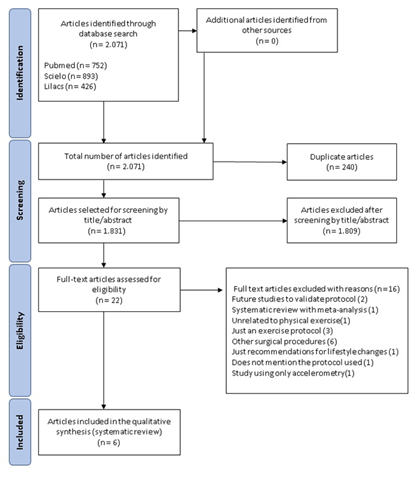
Figure 1 - PRISMA 2020 flow diagram for searches of databases,
registrar and other sources
In October 2024, a new search was conducted,
with a selection period of publications from 2022 to 2024, to update the
database for this review. This new search used the same process as the previous
one. In this update, 35 new articles were found, but none of them met the
search criteria determined for this systematic review. Of the 35 articles found, seven were removed because
they had a different outcome, seven were removed because they had a different
study time, and 21 were removed due to incompatibility.
Methodological quality
assessment and risk of bias
Methodological quality was assessed
through the Tool for the Assessment
of Study quality and reporting in Exercise (TESTEX), which was developed
specifically for studies that use physical training as an intervention [20].
The identification of the risk of bias of randomized
clinical trials was performed through Cochrane's Risk of Bias tool version 2 (RoB 2) [21]. Both the
methodological quality and the risk of bias followed the same procedure. Two
researchers (TSA and BAR) performed both evaluations independently. Then a
meeting was held to resolve the disagreements, and when necessary, a third
researcher (RFC) made the final decision [21].
Results
Characteristics
of the studies
Information on population, treatment,
and results of the measures of interest is presented in Table I. In general,
the sample size among these studies ranged from 15 to 60 subjects, aged between
30 and 50 years. Only one study (16.7%) was composed of an exclusively female
sample and the remaining five studies (83.3%) included participants of both
sexes. In three articles (50%) analyzed, physical exercise was initiated
between 12 and 24 months after RYGB [22-24]. In two other studies (33.3%), the
intervention with physical exercise started 1 month after RYGB [25,26] and in
only one study (16.67%), the training began 3 months after the RYGB [27]. In general, the intervention with physical exercise lasted
between 3 and 6 months. Physical exercise interventions occurred 2 to 3 times a
week. Each training session lasted approximately 60 to 75 minutes. In all the
articles evaluated, the combined training was supervised. It consisted of a
warm-up period, aerobic exercises, strength exercises, and was concluded by a
cooling period (return to calm).
Table
I - Studies
included in the systematic review
Table II -
Studies
with a 3-month treatment protocol included in the systematic review
Body mass and
body mass regain
No significant differences were
observed in the loss of body mass between the intervention and control groups
in the studies selected for this systematic review [22,23,24,25,26]. However, three studies have shown that combined training
was able to prevent weight regain after 6 to 12 months of training
[22,23,24]. Mundbjerg et al. [23,24] demonstrated that
after the intervention period with combined exercises performed in a supervised
manner, participants were able to maintain body mass for the subsequent 12
months. This result is a strong indication of the positive influence of
combined exercise and the necessity of maintaining adherence to avoid weight
regain.
Muscle mass and muscle
strength
Unfortunately, none of the studies selected for
this systematic review measured muscle mass. On the other hand, muscle strength
was the focus of interest in four selected studies [22,23,25,26]. Only Stegen et al. [25] showed significant
differences in strength gain in the quadriceps, biceps brachii, and triceps
brachii. The other three articles [22,23,26] presented inconclusive results regarding
this one. Although Mundbjerg et al.
[23] observed significant differences in strength in hip abduction, the same did
not happen in the other axes of hip and deltoid movement, while Noack-Segovia et al. [26] and Herring et al. [22] did not identify significant
differences in handgrip strength.
Bone mineral
density
Only Murai et al. investigated the effects on bone mineral density through
DEXA, high-resolution peripheral quantitative computed tomography (HR-pQCT), and biochemical tests. The study observed that
supervised training reduced the damage caused by RYGB in the BMD of the femur,
quadriceps, and distal radius regions. In addition, they demonstrated that the
training was able to minimize the levels of collagen type I C-telopeptide (a marker
of bone resorption), procollagen, and sclerostin (a protein inhibitor of
osteoblast activity) [27].
Table III - Studies
with a 6-month treatment protocol included in the systematic review
Testex Scale and Risk of Bias
In the Testex scale,
studies considered to be of high methodological quality have a score of 10
points or higher. Just the work of Stegen et
al. [25] received a rating below this cut-off point. None of the studies
blinded the evaluators to at least one result of interest, and only one article
collected information about possible participation in physical activity outside
the study among the participants in the control group [26].
Through the Cochrane tool, it was possible to
observe that of the six studies selected for the present systematic review,
five obtained an uncertain risk classification of bias, and the one article was
classified with high risk of bias.
The individual results of each study, for regarding methodological
quality and risk of bias are presented in Tables IV and V, respectively.
Table IV -
Methodological quality result through the TESTEX Scale
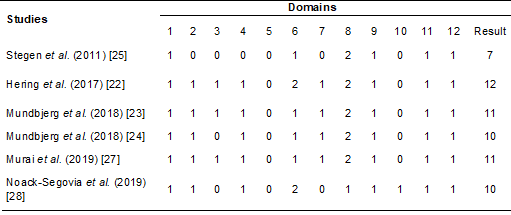
Domain 1: specified eligibility; 2: specified
randomization; 3: allocation concealment; 4: baseline-like groups; 5: evaluator
blinding; 6: outcome measures; 7: intention-to-treat analysis; 8: statistical
comparisons; 9: point and variability measures; 10: control group monitoring;
11: relative exercise intensity; 12: exercise volume and energy cost
Table V - Risk
of bias of selected articles
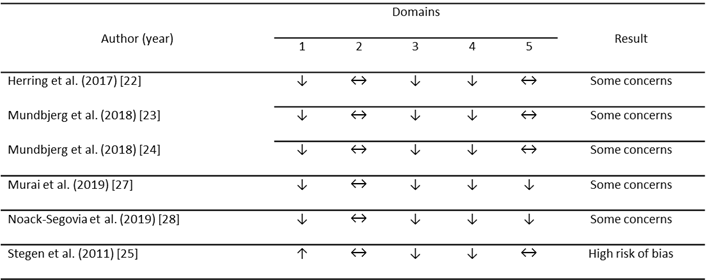
Criteria 1: Bias arising from the randomization process; 2: Bias due to
deviations from intended interventions; 3: Bias due to missing outcome data; 4:
Bias in measurement of the outcome; 5: Bias in selection of the reported
result; ↓: low risk of bias; ↔: some concerns; ↑: high risk
of bias
Discussion
The
present systematic review identified that combined training was able to prevent
the regain of body mass and minimize the loss of bone mineral density observed
in the control groups. However, the reduction in body mass, fat-free mass, and
muscle strength after surgery was similar between the groups regardless of exercise.
Further studies are needed to better understand changes in muscle mass, because
this variable is usually observed indirectly through fat-free mass. In general,
great care should still be taken in interpreting these results, especially
regarding bone mineral density, due to the limited number of studies available.
The initial hypothesis shared among some authors
[22,25], that the inclusion of combined training could maximize the loss
of body mass after RYBG due to the combination of reduced caloric intake with
increased energy expenditure caused by exercise has not been confirmed [22,24,25].
Despite the limitation of not having calculated the caloric expenditure of the
exercise, likely, that the energy expenditure was not high due to the inherent characteristics
of the population studied and the combination of volume and intensity proposed.
In addition to the low energy expenditure of the proposed exercises, the gross
energy expenditure of the exercise needs to be subtracted from the basal
metabolic rate at rest, since, for the individual to engage in an exercise
program, must stop performing other activities at rest [28]. Therefore, the
effective energy expenditure of the exercise program is reduced, and
insufficient to induce the reduction of body mass. However, the training was
able to avoid the regain of body mass in up to 12 months [22,23,24]. In addition
to the exercises, the subjects of the training group received recommendations
on diets and the adoption of an active lifestyle soon after the intervention
period. Such recommendations may have contributed to the result, considering
that the regain of body mass
is often attributed to the lack of adherence to adequate eating habits and
physical exercise routine [22,24]. The importance of this finding lies
in the observation that body weight regain occurs in several subjects who
undergo RYGB and has significant negative impact on health [29].
Regarding muscle strength, the results are
inconclusive [22,23,25,26]. Four studies evaluated the impact on strength, and
three of these studies did not observe a significant difference [22,25,26]. All studies that did not observe any difference in the
ability to produce strength in subjects trained with combined versus untrained
exercises (control group) after RYGB, with strength measured with the handgrip
test. However, caution is needed in interpreting
these results because this measure of strength is dependent on a particular task.
None of the three studies included handgrip exercises in their training
program. Therefore, the non-specificity of the exercise program with the
strength measurement performed in the tests may mask the possible strength
gains in the muscle groups trained [22,26]. This
hypothesis could be reinforced by Stegen et
al. [25] who observed a significant increase in strength levels in the
quadriceps, biceps brachii, and triceps brachii after 12 weeks in the subjects
undergoing the training compared to their untrained peers. However, Stegen et al. [25] presented a serious threat
to the risk of bias for random sequence generation (randomization) and
allocation concealment. Thus, further studies are needed to determine the real actual
effect of a combined exercise program on muscle strength gains in obese individuals
undergoing RYGB.
Although few studies have sought to
observe the effect of combined exercises on bone mineral density, their
training appears to reduce the negative impact caused by RYGB [27].
Murai et al. [27} observed that supervised combined training attenuated bone
loss in the
quadriceps, femur, and distal radius regions, also obtained benefits in
reducing bone resorption components. RYGB promotes
the increase of sclerostine and DIEKOPF-1, which are
responsible for the inhibition the WNT signaling pathway that primarily acts on
bone remodeling through osteoblast stimulation [30]. Combined exercise can be a direct agent in preserving bone
mineral density by decreasing the concentrations of sclerostine
and DKK-1 in the bloodstream.
It is
estimated that 31% of the reduction in post-surgical body mass is a reflection
of the decrease in fat-free mass [31,32]. Due to reduced food and
caloric consumption, nutrient absorption is hampered, which markedly decreases lean
mass, exerting metabolic,
anti-inflammatory effects, maintaining insulin sensitivity, and reducing oxidative
stress [33]. However, muscle mass is just
another component of fat-free mass [34]. Therefore, the specific
measurement of muscle mass is fundamental to understanding the extent to which
physical exercise can contribute to reducing the adverse effects of RYGB on
this variable. In the studies suitable for this review, none measured the
muscle mass directly, instead observing only the changes in fat-free mass
[22,25,26]. Therefore, measuring of fat-free mass must not be sufficient to
understand this important variable for the health of the target population. Consequently,
further studies are needed to understand better the effects of combined
exercise training on muscle mass.
An important limitation of the
studies selected for this systematic review is the low adherence to training
reported by some [23,24]. In the
studies by Mundjberg et al. [23,24], 32
subjects were examined. Only 59.4% had training frequency equal to or greater
than 50% of the sessions, while 25% attended less than 10% of the scheduled
training sessions. In addition to the low adherence to the practice of physical
exercise characteristic of the sample, the authors reported that the subjects
were trained in a public training center. This condition may have contributed
to the low attendance rate, as the subjects could experience low self-esteem
and dissatisfaction with their body mass. In addition, the long distance
between the residences of some participants, and the training site, as well as the
workload, may have impacted the rate of attendance at exercise sessions.
The absence of control over caloric intake or the
observation of dietary habits of study participants through food recall was
observed in several studies [25,26,27]. The
control of eating behavior not only facilitates the correct observation of
changes in body composition and strength level, but can also interfere with bone
mineral density results, as RYGB causes changes in the percentages of
absorption of dietary macro- and micronutrients [27,35].
An important difference of this
systematic review was the evaluation of both the risk of bias by the Cochrane
Scale and the methodological quality by TESTEX, allowing for a comprehensive of
the confidence and extrapolation of the results of the selected articles. Given
this, it was possible to observe that half of the studies selected in this
systematic review presented, in at least one domain of the Cochrane scale, a
high risk of bias, despite having high scores on the TESTEX scale. Therefore,
the certainty of the results observed (internal validity) in the selected
studies is diminished, reinforcing the need for further studies with greater
methodological rigor.
The present review also demonstrated
that there are still gaps to be investigated in regarding combined exercise
training and the target population, especially in terms of measuring muscle
mass and bone mineral density, as well as efforts to minimize the risks of bias
commonly observed in these studies. Although it was not the primary focus of
this review, and the selected studies present some important limitations, it
was observed that a combined exercise program can improve functionality
[23], reduce cardiovascular risks [24] and the lipid profile [24] of subjects
who underwent RYGB. These results taken together can contribute to an improved
overall quality of life of the individual.
Conclusion
Although physical exercise is
commonly recommended to individuals who have undergone bariatric surgery, the
knowledge gap regarding the effect of combined exercise training in this
population remains substantial. The lack of high-quality studies with low risk of bias, the inadequate
choice of evaluation tools to obtain measures of interest, and the limited
number of articles selected for the measures of interest underscore the need
for new studies to be conducted to increase confidence in the reported results.
Of the measures of interest, the
non-observation of the most significant body weight reduction between the
individuals who trained and the control, as well as the lower magnitude of
weight regain in the trained individuals, has the best reliability in the
observations compared to the other measures of interest (bone mineral density,
strength and muscle mass).
Conflict of interest
All authors declare no
conflict of interest
Sources of funding
CNPq
Authors' contributions
Conception and design of the research: Carvalho
R, Pires L; Data collection: Almeida
T, Arruda B Tenius V; Data analysis and interpretation: Carvalho R, Pires L; Statistical analysis: Carvalho R, Pires
L; Writing of the manuscript:Almeida T, Arruda B; Critical revision of the
manuscript for important intellectual content: Carvalho R, Pires L
References
- Pollack AAMA. Recognizes obesity as a disease -
The New York Times. New York Times. Published 2013. [citado
2023 Jan 6]. Disponível em:
https://www.nytimes.com/2013/06/19/business/ama-recognizes-obesity-as-a-disease.html
- Ministério da Saúde. Vigitel Brasil 2021: Vigilância de fatores de risco e proteção para doenças crônicas por inquérito
telefônico estimativas sobre frequência e distribuição sociodemográfica de fatores de risco e proteção para doenças crônicas nas capitais
dos 26 estados brasileiros
e no Distrito Federal em 2021. [citado
2023 Jan 6]. Disponível em:
www.saude.gov.br/svs
- Costa CDS, Steele EM, Leite MA, Rauber F, Levy RB, Monteiro CA. Mudanças no peso corporal na coorte NutriNet Brasil durante a pandemia de
covid-19. Rev Saude Publica.
2021;55. https://doi.org/10.11606/S1518-8787.2021055003457 [Crossref]
- Buchwald H. Metabolic/bariatric surgery during COVID-19. Obes Surg. 2021;31(6):2783. doi: 10.1007/S11695-021-05254-8 [Crossref]
- Oliveira AM, Costa SS, Costa IS, Júnior N de JPB. Bariatric surgeries performed in the unique Brazilian
Health System between 2010 and 2019. Research, Society and Development.
2021;10(1):e47510111985. doi: 10.33448/RSD-V10I1.11982 [Crossref]
- Poghosyan T, Baratte C. Bariatric surgery
techniques. Rev Prat. 2022;72(2):160-63. [citado 2022 Dec 22. [citado 2023
Mar 12]. Disponível em:
https://pubmed.ncbi.nlm.nih.gov/35289524/
- Buchwald H, Avidor Y, Braunwald E, Jensen MD, Pories W, Fahrbach K, et al. Bariatric surgery: a systematic review and meta-analysis. JAMA. 2004;292(14):1724-37. doi: 10.1001/JAMA.292.14.1724 [Crossref]
- Cooper TC, Simmons EB, Webb K, Burns JL, Kushner RF. Trends in weight regain following Roux-en-Y Gastric Bypass (RYGB) Bariatric Surgery. Obes Surg. 2015;25(8):1474-81. doi: 10.1007/S11695-014-1560-Z [Crossref]
- Velapati SR, Shah M, Kuchkuntla AR, Abu-Dayyeh, Grothe K, Hurt RT, et al. Weight regain after bariatric surgery: prevalence, etiology, and treatment. Curr Nutr Rep. 2018;7(4):329-34. doi: 10.1007/S13668-018-0243-0 [Crossref]
- Carey DG, Pliego GJ, Raymond RL. Body composition and metabolic changes following bariatric surgery: effects on fat mass, lean mass and basal metabolic rate: six months to one-year follow-up. Obes Surg. 2006;16(12):1602-08. doi: 10.1381/096089206779319347 [Crossref]
- Cleva R, Mota FC, Gadducci AV, Cardia L, D’Andréa Greve JM, Santo MA. Resting metabolic rate and weight loss after bariatric surgery. Surg Obes Relat Dis. 2018;14(6):803-07. doi: 10.1016/J.SOARD.2018.02.026 [Crossref]
- Goldner WS, O’Dorisio TM, Dillon JS, Mason EE. Severe metabolic bone disease as a long-term complication of obesity surgery. Obes Surg. 2002;12(5):685-92. doi: 10.1381/096089202321019693 [Crossref]
- Yu EW, Bouxsein ML, Roy AE, Baldwin C, Cange A, Neer RM, et al. Bone loss after bariatric surgery: discordant results between DXA and QCT bone density. J Bone Miner Res. 2014;29(3):542. doi: 10.1002/JBMR.2063 [Crossref]
- Zubiaurre PR, Bahia LR, da Rosa MQM, Assumpção RP, Padoin AV, Sussembach SP, et al. Estimated costs of clinical and surgical treatment of severe obesity in the Brazilian Public Health System. Obes Surg. 2017;27(12):3273-3280. doi: 10.1007/S11695-017-2776-5 [Crossref]
- Willis LH, Slentz CA, Bateman LA, Shields AT, Piner LW, Bales CW, et al. Effects of aerobic and/or resistance training on body mass and fat mass in overweight or obese adults. J Appl Physiol (1985). 2012;113(12):1831-37. doi: 10.1152/JAPPLPHYSIOL.01370.2011 [Crossref]
- Schroeder EC, Franke WD, Sharp RL, Lee DC.
Comparative effectiveness of aerobic, resistance, and combined training on
cardiovascular disease risk factors: A randomized controlled trial. PLoS One. 2019;14(1). doi: 10.1371/JOURNAL.PONE.0210292 [Crossref]
- Coen PM, Goodpaster BH. A role for exercise after bariatric surgery? Diabetes Obes Metab. 2016;18(1):16-23. doi: 10.1111/DOM.12545 [Crossref]
- Häkkinen K, Alen M, Kraemer WJ, Gorostiaga E, Izquierdo M, Rusko H, et al. Neuromuscular adaptations during concurrent strength and endurance training versus strength training. Eur J Appl Physiol. 2003;89(1):42-52. doi: 10.1007/S00421-002-0751-9 [Crossref]
- Moher D, Liberati A, Tetzlaff J, Altman DG. Preferred reporting items for systematic reviews and meta-analyses: the PRISMA Statement. Open Medicine. 2009;3(3):e123. doi: 10.14306/renhyd.18.3.114 [Crossref]
- Smart NA, Waldron M, Ismail H, Giallauria F, Vigorito C, Cornelissen V, et al. Validation
of a new tool for the assessment of study quality and reporting in exercise
training studies: TESTEX. Int J Evid Based Healthc.
2015;13(1):9-18. doi: 10.1097/XEB.0000000000000020
- Sterne JAC, Savović J, Page MJ, Elbers RG, Blencowe NS, Boutron I, et al. RoB 2: a revised tool for assessing risk of bias in randomised trials. BMJ 2019; 366: l4898. doi: 10.1136/bmj.l4898 [Crossref]
- Herring LY, Stevinson C, Carter P, Biddle SJH, Bowrey D, Sutton C, et al. The effects of supervised exercise training 12-24 months after bariatric surgery on physical function and body composition: a randomised controlled trial. Int J Obes (Lond). 2017;41(6):909-16. doi: 10.1038/IJO.2017.60 [Crossref]
- Mundbjerg LH, Stolberg CR, Bladbjerg EM, Funch-Jensen P, Juhl CB, Gram B. Effects of 6 months supervised physical training on muscle strength and aerobic capacity in patients undergoing Roux-en-Y gastric bypass surgery: a randomized controlled trial. Clin Obes. 2018;8(4):227-35. doi: 10.1111/COB.12256 [Crossref]
- Mundbjerg LH, Stolberg CR, Cecere S, Bladbjerg EM, Funch-Jensen P, Gram B, et al. Supervised physical training improves weight loss after Roux-en-Y Gastric Bypass Surgery: a randomized controlled trial. Obesity (Silver Spring). 2018;26(5):828-37. doi: 10.1002/OBY.22143 [Crossref]
- Stegen S, Derave W, Calders P, Van Laethem C, Pattyn P. Physical fitness in morbidly obese patients: effect of gastric bypass surgery and exercise training. Obes Surg. 2011;21(1):61-70. doi: 10.1007/S11695-009-0045-Y [Crossref]
- Noack-Segovia JP, Sánchez-López AM, García-García I, Rodríguez-Blanque R, León-Ríos XA, Aguilar-Cordero MJ. Physical exercise and grip strength in patients intervened through bariatric surgery. Aquichan. 2019;19(3). doi: 10.5294/AQUI.2019.19.3.6 [Crossref]
- Murai IH, Roschel H, Dantas WS, Gil S, Merege-Filho C, Cleva R, et al. Exercise mitigates bone loss in women with severe obesity after Roux-en-Y Gastric Bypass: a randomized controlled trial. J Clin Endocrinol Metab. 2019;104(10):4639-50. doi: 10.1210/JC.2019-00074 [Crossref]
- Pontzer H. Energy constraint as a novel mechanism linking exercise and health. Physiology (Bethesda). 2018;33(6):384-93. doi: 10.1152/PHYSIOL.00027.2018 [Crossref]
- Karmali S, Brar B, Shi X, Sharma AM, De Gara C, Birch DW. Weight recidivism post-bariatric surgery: a systematic review. Obes Surg. 2013;23(11):1922-33. doi: 10.1007/S11695-013-1070-4 [Crossref]
- Baron R, Kneissel M. WNT signaling in bone homeostasis and disease: from human mutations to treatments. Nat Med. 2013;19(2):179-92. doi: 10.1038/NM.3074 [Crossref]
- Vaurs C, Diméglio C, Charras L, Anduze Y, Chalret du Rieu M, Ritz P. Determinants of changes in muscle mass after bariatric surgery. Diabetes Metab. 2015;41(5):416-21. doi: 10.1016/J.DIABET.2015.04.003 [Crossref]
- Chaston TB, Dixon JB, O’Brien PE. Changes in fat-free mass during significant weight loss: a systematic review. Int J Obes (Lond). 2007;31(5):743-50. doi: 10.1038/SJ.IJO.0803483 [Crossref]
- DeMaria EJ. Bariatric surgery for morbid obesity. N Engl J Med. 2007;356(21):2176-83. doi: 10.1056/NEJMCT067019 [Crossref]
- Jensen B, Braun W, Geisler C, Both M, Klückmann K, Müller MJ, et al. Limitations of fat-free mass for the assessment of muscle mass in obesity. Obes Facts. 2019;12(3):307-15. doi: 10.1159/000499607 [Crossref]
- Fabiani R, Naldini G, Chiavarini M. Dietary patterns in relation to low bone mineral density and fracture risk: a systematic review and meta-analysis. Adv Nutr. 2019;10(2):219-36. doi: 10.1093/ADVANCES/NMY073 [Crossref]
