Rev
Bras Fisiol Exerc. 2025;24:e245648
doi: 10.33233/rbfex.v24i1.5648
ORIGINAL ARTICLE
Hydration status and sodium concentration in the sweat
of adult athletes from the Brazilian Rhythmic Gymnastics Team
Estado de hidratação e concentração de sódio no suor de atletas adultas
da Seleção Brasileira de
Ginástica Rítmica de conjuntos
Joana
Medeiros Sales1, João Henrique Gomes1, Bruna Matins2
Camila Ferezin Resende2, Renata Rebello Mendes1
1Universidade
Federal de Sergipe, Aracaju, SE, Brazil
2Confederação
Brasileira de Ginástica, Aracaju, SE, Brazil
Received:
June 30,2025; Accepted: September 22, 2025.
Correspondence: Renata Rebello Mendes, remendes@academico.ufs.br
How to cite
Joana Medeiros Sales
JM, João Henrique Gomes JH, Bruna Matins B, Camila Ferezin Resende CF, Renata
Rebello Mendes, RR. Hydration status and sodium concentration in the
sweat of adult athletes from the Brazilian Rhythmic Gymnastics Team. Rev Bras Fisiol Exerc 2025;24(1):e245648. doi: 10.33233/rbfex.v24i1.5648
Abstract
Introduction: Dehydration in athletes,
characterized by a loss of ≥ 2% of body mass during physical exertion, is
often correlated with decreased muscle perfusion, increased perceived exertion,
impaired muscle hypertrophy, hyperthermia, and reduced cardiac output and
thermoregulation. These phenomena culminate in decreased performance and health
problems and should be prevented. Objective: To evaluate pre-training
hydration status, as well as the impact of a training session on sweat rate,
post-training hydration status, and sodium concentration in sweat produced
during training of adult athletes from the Brazilian Rhythmic Gymnastics Team. Methods: A cross-sectional study developed with 11 gymnasts,
with 10.7 (2.4) years of experience in rhythmic gymnastics (RG) training and
3.4 (2.5) years of participation in the national team. Pre- and post-exercise
hydration status was assessed by urine color and density. The dehydration rate
was evaluated based on body mass fluctuation between the beginning and end of
training, calculated proportionally to initial body weight (%). The sweat rate
was calculated based on body mass fluctuation associated with food and beverage
intake and urinary excretion during training. The intra- and extra-body water
ratio was assessed using bioelectrical impedance analysis. Sweat sodium
concentration was measured using the Gx Sweat Patch. Results: The average dehydration rate during training was
0.2%, and 90.9% of the athletes had a dehydration rate below 2%. The average
sweat rate was 322.8 ml/hour during training. Urine color and density indicated
that 100% of the athletes arrived at training with some degree of hypohydration,
with 81.8% mild and 18.2% moderate. At the end of training, 72.7% were
moderately dehydrated, and 27.3% were mildly dehydrated. The sweat sodium
concentration of all athletes was classified as low. Conclusion: Although fluid replacement
during training prevented losses of more than 2% of body mass in most athletes,
and sodium concentrations were low in all of them, they were hypohydrated from the beginning of the session and remained
so until the end.
Keywords: dehydration; gymnastics; physical
exercise; sweat; sodium.
Resumo
Introdução: A desidratação em atletas, caracterizada por
perda ≥ 2% da massa corporal durante o esforço físico, costuma se
correlacionar com menor perfusão muscular, elevação da percepção subjetiva de
esforço, prejuízo na hipertrofia muscular, hipertermia, e redução de débito
cardíaco e da termorregulação. Tais fenômenos culminam em queda de performance
e prejuízos de saúde, e devem ser prevenidos. Objetivo: Avaliar o
estado de hidratação pré-treinamento, bem como o impacto de uma sessão de
treinamento sobre a taxa de sudorese, o estado de hidratação pós-treinamento e
concentração de sódio no suor produzido durante o treinamento de atletas
adultas da Seleção Brasileira de Ginástica Rítmica. Métodos: Estudo
transversal desenvolvido com 11 ginastas, com 10,7 (2,4) anos de experiência em
treinamentos de ginástica rítmica (GR), e 3,4 (2,5) anos de participação em seleção nacional. Os estados de hidratação pré e pós-exercício foram avaliados pela cor e
densidade da urina. A taxa de desidratação foi
avaliada de acordo
com a oscilação de massa corporal entre o início
e o final do treinamento, calculada proporcionalmente
ao peso corporal inicial (%); a taxa de sudorese foi calculada de acordo com a
oscilação de massa corporal, associada à ingestão de alimentos e bebidas, e
excreção urinária durante
o treinamento; a
proporção de água intra e extra-corporal,
por bioimpedância elétrica;
a concentração de sódio no suor,
por meio de adesivo Gx
Sweat Patch. Resultados: A taxa de desidratação média durante o treinamento foi de 0,2%, e
90,9% das atletas apresentou taxa de
desidratação inferior a 2%. A taxa de sudorese média foi de 322,8 ml/hora
durante o treinamento. A cor da urina
e a sua densidade indicaram que 100% das atletas chegaram ao
treinamento com algum grau de hipohidratação, sendo 81,8% em grau leve e 18,2% moderado. Ao final do treinamento, 72,7%
estavam em estado
de desidratação moderada e 27,3%, leve. A concentração de sódio no suor de todas as atletas foi classificada como baixa.
Conclusão: Embora a reposição de fluidos durante
o treinamento tenha prevenido perdas superiores a 2% da massa corporal na
maioria das atletas, e a concentração de sódio tenha se mostrado baixa em todas
elas, estas apresentaram-se hipohidratadas desde o início da sessão,
permanecendo assim até o final.
Palavras-chave: desidratação; ginástica; exercício físico; suor; sódio.
Introduction
During physical
exercise, approximately 75% of the energy produced is dissipated in the form of
heat [1], with evaporation being the main mechanism promoting thermal
homeostasis [2]. Therefore, fluid loss during sports is a common phenomenon
among athletes, and, when fluid loss is not adequately replenished, it can harm
not only their athletic performance but also their health [3,4,5,6,7,8,9,10].
It is believed
that fluid losses approaching 1% of body mass can lead to a moderate reduction
in performance [11], culminating in significant losses for elite teams, given
that any drop in performance can lead to drastic changes in ranking [12].
However, the harmful effects of inadequate fluid replacement are most evident
when the loss exceeds 2% of body mass, characterizing a state of dehydration [5,13,14].
In this situation, in addition to reduced muscle perfusion [15], increased
subjective perception of exertion (RPE) [7], impaired muscle hypertrophy [9],
and, consequently, a drop in performance, clinical manifestations such as
reduced cardiac output, reduced thermoregulation, and hyperthermia [16] also
stand out. Therefore, it is essential to fully replace the fluids lost during
training or, at least, a sufficient amount to prevent the loss from exceeding
2% of body mass [14]. Given this, it becomes necessary to evaluate the sweat
rate of athletes during efforts, especially in their specific training routines,
since sweating can vary significantly according to factors inherent to the
physical exercise to be performed [7].
According to
Lopes-Torres et al. [2], long-duration exercise can increase the risk of
dehydration in athletes due to greater exposure to elevated body temperature
and, consequently, sweating. In this perspective, Rhythmic Gymnastics (RG)
stands out as a modality that seeks “perfection” through the execution of body
movements, handling of equipment, and musical accompaniment [17,18]. For
athletes to perform exercises with excellence, they are subjected to high
training volumes, which can reach 50 hours per week [19,20], which increases
the risk of intra-workout dehydration and makes it difficult to reestablish euhydration at rest, due to the limited time between
training sessions [13].
In addition to the
risk of dehydration, athletes who have a higher concentration of sodium in
their sweat, as well as female athletes, are considered more susceptible to
hyponatremia [21] and its complications can be mild, such as vomiting, headache
and altered mental status, or severe, characterized by encephalopathy and risk
of death [22].
Despite the
potential vulnerability of rhythmic gymnasts to dehydration and hyponatremia
due to their high training volume and female biological sex, our searches did
not find any studies evaluating water balance or sweat sodium concentrations
among rhythmic gymnasts. Therefore, the present study aimed to characterize the
pre-workout hydration status, sweating, and dehydration rates during a training
session, as well as the sweat sodium concentration of adult athletes from the
Brazilian National Team of Rhythmic Gymnastics.
Methods
Experimental
design
This is an
observational, cross-sectional study. Four visits were made to the National
Rhythmic Gymnastics Training Center (TC), located in Aracaju, Sergipe. During
the first visit, the project was presented to the Technical Committee, and the
Institution's consent form was obtained for subsequent submission to the
Research Ethics Committee of the Federal University of Sergipe. After approval
(process no. 92652418.0.0000.5546), the remaining stages of the study were
continued. During the second visit to the TC, the Informed Consent Form (ICF)
was provided to all athletes of the adult team, and any questions were
clarified. During the third visit, the ICF was received from the athletes
interested in participating in the study. At this same stage, a semi-structured
questionnaire was applied, and the bioelectrical impedance test was performed
to characterize the participants' body composition. The fourth visit to the
training center consisted of data collection: application of protocols to
assess hydration status, intra-workout water balance, and sweat sodium
concentration, including: a) urine color; b) urine specific gravity (density);
c) bioelectrical impedance analysis; d) sweat collection patch; e) body mass
fluctuation. Urinary parameters and bioelectrical impedance analysis were
assessed pre and post-workout to analyze possible
changes in hydration status resulting from training. Body mass analysis
included pre- and post-workout weight measurement, quantification of fluids
and/or food consumed during the training session, and quantification of urinary
volume excreted during the training session. By controlling for these
variables, changes in body mass allowed the calculation of the athletes' sweat
rate and dehydration rate, which are the subjects of this study.
Participants
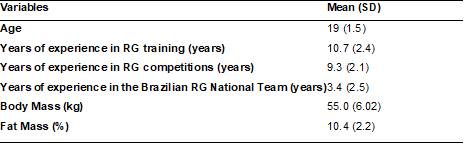
Eleven athletes
from the Brazilian National Rhythmic Gymnastics Team (Table I) participated in
the study. The inclusion criterion was membership in this team. The exclusion
criteria were: a) athletes who were unable to complete a training session at
their usual intensity, whether due to injury or any other reason; b) athletes
exposed to behaviors or situations that favor dehydration, such as diuretic
use, recent sun exposure, recent alcohol consumption, episodes of vomiting or
diarrhea, etc.; c) athletes with metal objects in their bodies, such as pins
and plates. Of the 13 athletes who comprised the team at the time of data
collection, two were excluded due to injuries that prevented them from
completing one or more training phases.
Table I - Characterization of the rhythmic gymnasts of the
Brazilian National Team, participants in the study (n = 11)
Environmental
conditions at the time of data collection
The training
session during which the study was conducted took place in the morning at the
Brazilian Rhythmic Gymnastics Team Training Center (TC), located in Aracaju,
Sergipe, Brazil. The training center is equipped with air conditioning, and
during the training session during which the study was conducted, the ambient
temperature varied between 24°C and 28°C. In Aracaju, the average daily
humidity was 74%.
Training
characteristics on the day of data collection
The session was
led by the Brazilian National Team's coaching staff, following the
pre-competitive training routine. The session consisted of the following
stages: a) non-standardized individual warm-up (10 minutes); b) ballet training
(30 minutes); c) trunk and lower limb flexibility (10 minutes); c) training
exercises based on physical difficulties and repetitions of isolated elements,
such as dance steps, risks, exchanges, and collaborations (40 minutes); d)
practice of the training routine, with and without music (138 minutes). This
training session lasted a total of 240 minutes, including breaks for food and
fluid intake. The researchers did not interfere with the organization of the
training session or the quality and quantity of liquids and solids consumed
during the session.
Adopted protocols
1. To
characterize the participants
1.1 General
characteristics of the participants: a semi-structured questionnaire was
applied addressing age, time of experience in RG training, competitions, and
participation in the Brazilian team.
1.2 Body
composition: the Biodynamics (BIA 450),
TBW brand, bioelectrical impedance device was used to assess body composition
[23]. In the present study, the athletes followed the previous procedures
required to perform bioelectrical impedance.
2. To assess the hydration status of gymnasts:
2.1 Urine color: In this method, it is taken into account
that the lower the individual's hydration level, the darker the urine will be
[24]. In our study, urine collection was performed immediately before the start
of training and immediately after the end of training, allowing for a
comparison of hydration status at the two different times and any changes in
it. For this evaluation, a qualitative analysis of urine color intensity was
used using a Likert scale, which classifies hydration level based on urine color,
according to the study by Armstrong et al. [25]. According to this scale, the
colors corresponding to numbers 1 and 2 indicate "good hydration";
numbers 3 and 4 indicate "mildly dehydrated"; numbers 5 and 6,
"moderately dehydrated"; and 7 and 8, “severely dehydrated”. The
analysis was performed blindly to avoid possible bias in data interpretation.
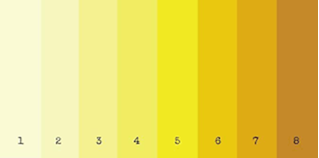
Figure 1 - Urine color scale for classifying hydration status,
proposed by Armstrong et al. [25]
2.2 Urine density: In the present study, urine density was assessed using
a portable Instrutherm refractometer, and the
techniques adopted were in accordance with the manufacturer's instructions.
Density identifies hydration status by measuring urine density and comparing it
with the density of double-distilled water [26]. A result below 1010 g/L indicates
good hydration, while a result between 1010 and 1020 g/L indicates minimal
dehydration. From 1021 g/L onwards, the patient is significantly dehydrated,
and severe dehydration is considered from 1030 g/L onwards [27]. In this case,
this assessment was also administered immediately before and after training,
allowing for the observation of possible changes caused by training.
2.3 Intra-workout Body Mass Change: In a review published by the International Society
of Sports Nutrition [27] on current methods for assessing hydration in
athletes, the authors classified the different methods according to criteria
such as accuracy, cost, invasiveness, administrator skill requirements, and
time required for implementation. The methods were ranked according to these
criteria, with scores ranging from 1 to 5. In terms of accuracy, pre- and
post-training body mass fluctuation received a score of 4, second only to
methods involving stable isotopes and neutron activation, whose execution times
are unfeasible for elite teams. During training, changes in body mass
may represent fluid loss through sweating, provided that fluid and food intake,
urine and feces excretion are taken into account [27]. The assessment of
sweating through body mass adopted the following procedure:
a) the athletes' weight was measured immediately before the start of
training;
b) during the
training session, the volume of fluids ingested, the weight of solid foods
consumed, and the volume of waste excreted by the athletes were recorded;
c) at the end of
training, the athletes' weight was measured again.
To identify the sweating rate during the training session, the collected
data were applied to the following equation:
Sweating
rate = (Pre-exercise body weight – Post-exercise body
weight) + Fluids consumed – Urine volume [27].
Furthermore, the athletes' weight loss rate was calculated, considering
the importance of identifying the level of dehydration to determine the risk of
presenting signs and symptoms resulting from negative fluid balance, based on
current scientific literature.
Dehydration
rate = (Pre-exercise body weight – Post-exercise body
weight) X 100 / Pre-exercise body weight [27].
The scale used to measure body weight was a Welmy
brand with an accuracy of 0.050 kg; to monitor liquid and solid consumption
during the training session, a digital scale from the XH Import brand was used,
with an accuracy of 0.001 kg; and to monitor urine excretion, specific
collectors were adopted for this purpose, all with identification of each
participant.
The
athletes were instructed to consume liquids and solids ad libitum, without any interference from the researchers.
2.4 Bioimpedance analysis: According to the review by the International
Society of Sports Nutrition [27], in which methods for assessing hydration in
athletes were classified with scores ranging from 1 to 5, the use of electrical
bioimpedance received a score of 3; however, the authors suggest that it may be
an aid in assessing the distribution of body water in different compartments
(extra and intracellular). Bioimpedance measures the resistance of a
low-voltage electrical current through the body, which is transmitted by ions
[23]. In the present study, bioimpedance testing was used before and after
training to assess possible changes in the amount of body water of athletes
that occurred during the training session. The device used was Biodynamics (BIA
450).
2.5 Sodium concentration in sweat: In the present study, this parameter was
assessed using the Gx Sweat Patch, a Gatorade sweat collector that identifies
the amount of chlorine present in the fluid and, through its correlation with
sodium, predicts the amount of sodium eliminated in sweat. The use of this tool
was validated by three recent studies [28,29,30]. Sweat sodium concentrations <
500 mg/L were classified as "very low"; low: 500 to 800 mg/L; medium:
801 to 1100 mg/L; high: 1101 to 1500 mg/L; and very high: > 1500 mg/L.
3.
To characterize the exercise intensity
Assessed through the subjective perception of exertion (RPE), obtained
using the CR10 Borg scale [31]. Participants answered the following question:
“How difficult do you think the exercise was?” RPE measurement was performed 30
minutes after training.
Statistical analysis
Descriptive statistics were used for data analysis. Variables were
presented as mean, minimum, and maximum standard deviation, and others as
absolute and relative frequencies. To compare variables in absolute values
between pre- and post-training, normality and homogeneity were initially tested
using the Shapiro-Wilk and Levene tests, respectively. Data that presented
regular distribution were subjected to the paired t-test (parametric test): urine specific gravity, total water,
extracellular water, intracellular water, and body mass. The chi-square test
was used to compare data in relative frequencies. The urine color result was
not normally distributed; therefore, a nonparametric test (Spearman's test) was
used to test for possible correlations. All analyses were performed with
SPSS-22.0 software (IBM, SPSS Inc., Chicago, IL, USA). Significance was set at p < 0.05.
Results
Table II describes
the differences in the study variables — body mass, body water, intracellular
water, extracellular water, urine color, and urine specific gravity — before
and after the training session. Total water and extracellular water levels
showed a statistically significant increase. Regarding sweat sodium
concentration, all athletes were diagnosed with low sweat sodium concentrations
(< 500mg/L), according to the criteria of the patch supplier.
Table II - Results of the evaluation of hydration markers
before and after training and recording of body mass
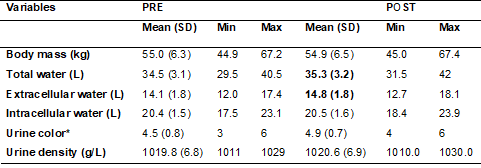
* The median was used for urine color.
Table III - Sweat rate, dehydration rate and RPE related to
training
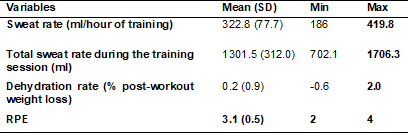
Table III
illustrates the sweating and dehydration rates during the training session, as
well as the RPE for the session. It is clear that, despite the low average
dehydration rate, there was significant variation in the percentage of
dehydration among the different athletes.
Therefore, it is
noteworthy that most participants maintained a level of dehydration considered
to be free of health and performance risks (Figure 3). However, it is important
to emphasize that all athletes arrived at training hypohydrated,
based on the analysis of urinary variables, and most finished the training even
more hypohydrated, as described in Figures 2 (team)
and 3 (individual description).
Regarding the
distribution of gymnasts according to the dehydration rate during the training
session, it was observed that 81.8% of participants presented a loss of body
mass of less than 1% of the initial body mass, while only 9.1% presented a loss
between 1 and 2%, and 9.1% obtained a loss greater than 2%.
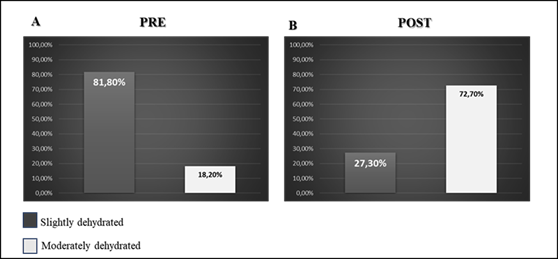
Figure
2 - Distribution
of gymnasts according to pre- (A) and post- (B) training hydration status, according
to urine color and density analysis
Table
IV shows the gymnasts' hydration status before and after training, based on
urine color and density. Note that five athletes (athletes 1, 2, 3, 6, and 11)
maintained their initial classification categories, while another six (athletes
4, 5, 7, 8, 9, and 10) moved to categories with a higher degree of dehydration.
Table IV - Classification
of athlete’s hydration according to urinary parameters before and after
training
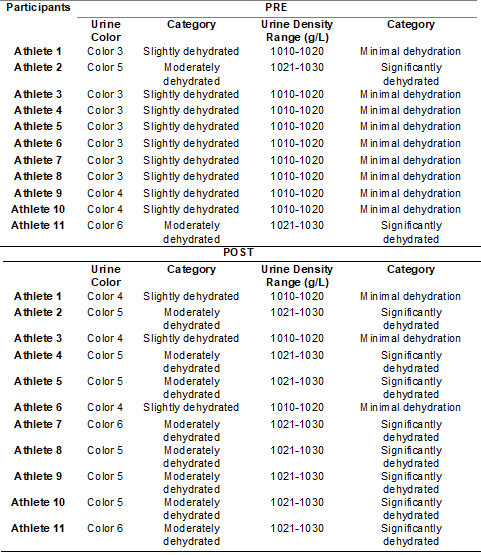
Classification criteria based on
urine color: Armstrong et. al, [25]; Classification criteria based on urine specific gravity: Casa et. al. [26]
Discussion
The objective of
this study was to characterize the pre- and post-training hydration status,
sweating, and dehydration rates during the session, as well as the sweat sodium
concentration of athletes from the Brazilian Rhythmic Gymnastics Team. Our main
findings indicate that the athletes began the training session hypohydrated, and this fact, associated with the water loss
experienced during training, even if small (average less than 1% of body mass),
culminated in the maintenance of the hypohydration diagnosis for all
participants at the end of the training. The sweat sodium concentration of all
participants was considered low.
Maintaining a safe
intra-workout weight loss percentage (< 2%) is essential for maintaining
health and athletic performance [5]. Therefore, to avoid dehydration, water
intake throughout exercise should be prioritized. However, in this study, the
athletes arrived at training hypohydrated and
maintained this state throughout the session (with no statistical differences).
In other words, considering the average of the team evaluated, the amount of
liquids consumed was sufficient to control the rate of dehydration, but not to
restore body hydration levels to a state of euhydration.
There are some
reports in the literature of results that differ from those found in our study.
Turner et al. [5] quantified the
sweat rate of 14 squash athletes during a training session and found a
prevalence of 79% of euhydrated athletes immediately
before the start of training, based on urine osmolality analysis. In a study by
Tarnowski et al. [5], conducted with
elite female soccer players, it was found that 47.4% of the athletes were euhydrated before training.
In contrast, many
studies point to a scenario similar to that identified in the present study.
Ceylan and Santos [33] evaluated the hydration status and fluid intake of 22
under-15 judo athletes and, based on urine specific gravity analysis, found
that 63.64% of the participants were significantly dehydrated before training.
Similarly, in an investigation of the hydration status of taekwondo athletes,
significant dehydration prevailed among participants in the pre-workout period
[34]. Furthermore, Freire-Júnior et al.
[35], in an evaluation of the water balance of female CrossFit practitioners,
found that all participants began training dehydrated, even if to a minimal
degree.
The differences in
results across these studies, some of which indicate poor hydration and others
adequate hydration pre-workout, may be related to the different training
volumes and loads to which the athletes studied are subjected. According to
Sawka et al. [13], high dedication of
time to training sessions can lead to greater dehydration and less time between
sessions, therefore reducing the athlete's opportunity to pursue rehydration
strategies. In the case of the Brazilian RG team, evaluated in this study, the
training and post-training physical therapy routine ends in the early evening
and resumes in the early morning. Therefore, the interval for rehydration
between sessions would be the early morning, a period during which athletes
prioritize sleep, which may interfere with pre-workout hydration status.
In any case, the
large number of studies that have identified a high prevalence of pre-workout
hypohydration, including the findings of this study, may indicate the
ineffectiveness of maintaining hydration beyond the training period. In this
sense, it is essential to evaluate the focus of the guidelines found in
consensus statements, position statements, and guidelines published for
athletes. It is noted, then, that guidelines for fluid consumption
"outside of training hours" are limited [36], which may further fuel
the confusion.
The American
College of Sports Medicine's position statement, "Nutrition and Athletic
Performance" [37], presents measures to prevent dehydration during
training, but is simplistic in recommending actions to maintain euhydration at other times of the day. Furthermore, some
studies propose nutritional practices that are not feasible for many sports.
For example, Kerksick et al. [36], in
an update of the International Society of Sports Nutrition recommendations,
propose the intake of 1,100 mL of fluids from waking up until the start of
training. However, for the Brazilian RG team, whose training routine starts in
the early hours of the day and can last up to ten hours a day [20], the
adoption of this guideline is not factual.
The weakness of
hydration guidelines beyond training hours is a problem that has persisted for
years. The American College of Sports Medicine's position paper on fluid
replacement, "Exercise and Fluid Replacement" [13], addresses some
general strategies for athletes to focus on fluid intake between two and four
hours before training. However, this guidance does not apply to the routine of
all sports, as athletes often have less than an hour between sessions, as is
the case with the Brazilian RG team. For this reason, athletes, coaches, and
other professionals seeking guidance in these documents may encounter a flaw in
the literature currently used: the focus on intra-workout hydration and the
lack of applicable guidelines for some sports outside of training.
The American
Institute of Medicine, through the DRI (Dietary Reference Intakes) [38],
recommends a daily intake of 2.3 liters of total water for women aged 14 to 18
and 2.7 liters of total water for women aged 19 to 30, the age groups in which
the adult athletes of the Brazilian Rhythmic Gymnastics Team are included. It
is believed that a starting point would be to introduce this water intake
during the athletes' rest periods.
This way, it is
possible to estimate adequate fluid intake during non-workout periods, until
further studies are conducted to assess the specific needs of these athletes,
considering that, even at rest, they are still in the recovery process. This
way, the harm caused by hypohydration, such as increased thermal and
cardiovascular stress [5], could be minimized.
In the present
study, the low prevalence of training-induced dehydration, identified as a loss
of ≥ 2% of body mass, may be due to the athletes' reduced sweating
(average 322.8 ml/h), as the International Society of Sports Nutrition [37]
reports that the average sweat rate in athletes can range from 500 mL to 2,000 mL. It is necessary to consider that the athletes of the
Brazilian Rhythmic Gymnastics Team receive nutritional monitoring, which allows
guidance regarding intra-workout hydration. Furthermore, it is noteworthy that,
previously, the athletes trained indoors without air conditioning.
Approximately one month before the present study, the athletes began training
in an environment with air conditioning, which, according to Sawka et al. [3], may have favorably affected
sweating rate, given their previous acclimatization to heat at higher
temperatures.
Gibson et al. [39] identified a similar
scenario regarding water balance. In an evaluation of female soccer players,
the average dehydration rate during training was 0.84%, which indicates
risk-free weight loss. In a study by Badham et
al. [9], during outdoor team sports training, an average dehydration rate
of 1.3% was found, representing a moderate-risk classification.
In the study by
Turner et al. [10], when evaluating
fluid consumption during a training session of squash players, an increase in
weight was identified; that is, the water balance was positive, representing an
average weight gain of 1.22%. Finally, the study by Arnaoutis
et al. [11] evaluated the hydration
status of highly trained athletes from different sports, including gymnastics.
In an evaluation of 10 athletes from this sport, hydration also exceeded
sweating, resulting in a 1.7% weight gain. It is clear, then, that dehydration
rates vary widely across scientific studies. Therefore, we believe it is
necessary to evaluate the fluid balance of different sports and, when possible,
monitor athletes' intra-workout weight loss, as recommended by official guidelines
[13].
Regarding the
adoption of bioimpedance as a tool to assess water status changes during
training, our study presented contradictory results compared to those
demonstrated using other variables. The fact that we had: a) athletes who were hypohydrated before training (urinary variables); b) 0.2%
average dehydration during training (body mass fluctuation); c) a higher
prevalence of athletes in the moderate dehydration category after training
leads us to hypothesize that post-training body water, measured by bioimpedance,
would present values similar to those of the pre-training period, or even
lower, depending on the statistical analysis; but not higher, as shown in the
results of this study.
It is believed that this discrepancy is due to
the limitations of the bioimpedance method for assessing acute changes in body
hydration, as cited by Barley et. al.
[27]. According to these authors, the use of bioimpedance may be an interesting
strategy for assessing hydration during rest periods, after specific
preparation the day before a session. However, at the time of this study, our
searches revealed no studies that had used this tool to assess rhythmic
gymnasts' performance at different points in their routines, which led us to
test it in this setting. However, in the present study, we believe that the
gymnasts' ad libitum fluid intake during training, especially the volumes
consumed closer to the end of the session, may have influenced the results of
the bioimpedance analysis of body hydration. This leads us to suggest further
studies to verify the viability of this tool in training settings.
Finally, it is
necessary to discuss the fact that, although most athletes presented adequate
intra-workout hydration levels, one gymnast (9.1% of the sample) experienced
water loss exceeding 2% of her body mass. The amount of sweat produced can vary
depending on individual characteristics of the athlete—such as heat
acclimatization, body weight, genetic predisposition, and metabolic
efficiency—characteristics that substantially increase the risk of
intra-workout dehydration [8]. Additionally, some athletes may experience
gastrointestinal discomfort when attempting to replace high water losses during
physical exertion [40] or may even face logistical difficulties in replenishing
fluids, such as shorter breaks for nutrition during training sessions due to the
athlete's greater attention to technical corrections proposed by the coaching
team. In situations where fluid replacement is difficult, regardless of the
cause, strategies to reduce fluid loss, such as ice in the oral cavity
(colling), may be useful [41]. The low sodium concentration in the sweat of all
participants in this study corroborates the scientific literature, as highly
conditioned athletes acclimated to exercise in hot environments typically
excrete sweat with sodium concentrations below 40 mmol/L, due to the greater
capacity of the sweat glands for sodium conservation, especially during
aerobic-dominant exercise. This capacity not only helps protect plasma volume
but also reduces the risk of hyponatremia [42].
The greatest
limitation of this study is its small sample size, a common occurrence when the
sample is specific, such as national teams in certain sports. It is also worth
noting the limitation of this descriptive, cross-sectional study, applied to a
specific setting, as outcomes may vary depending on the phases of training
periodization and environmental conditions. However, we believe that these
limitations do not invalidate the relevance of our findings, considering the
scarcity of studies on the topic and the direct impact of hypohydration on
athletes' performance and cardiovascular health. Furthermore, we believe that
hypohydration resulting from low fluid intake outside of training hours is not
exclusive to the Brazilian Rhythmic Gymnastics Team. Therefore, for future
studies, we emphasize the need to develop effective strategies to ensure
adequate hydration in the routines of athletes in various sports, including
rhythmic gymnastics.
Conclusion
The adult gymnasts of the Brazilian rhythmic gymnastics team began their
training session in a state of hypohydration and maintained this state until
the end of the session. The prevalence of intra-workout dehydration was low, as
was the concentration of sodium in sweat.
Conflicts
of interest
No conflicts of interest.
Funding
sources
No funding.
Authors' contributions
Conception and design of the research: Sales JM, Gomes JH, Mendes RR; Data collection: Sales JM, Martins B, Resende CF, Mendes RR; Análise e interpretação dos dados: Sales JM, Mendes RR; Statistical analysis: Gomes JH; Manuscript writing: Sales JM, Mendes RR; Critical review of the manuscript for important intellectual content: Sales JM; Gomes JH, Mendes RR
References
- Hermand E, Chabert C, Hue O. Ultra-endurance events in tropical
environments and countermeasures to optimize performances and health.
Int J Hyperthermia. 2019;36(1):753-60. doi: 10.1080/02656736.2019.1635718 [Crossref]
- López-Torres
O, Rodríguez-Longobardo C, Escribano-Tabernero R, Fernández-Elías VE.
Hydration, hyperthermia, glycogen, and recovery: crucial factors in exercise
performance - a systematic review and meta-analysis. Nutrients. 2023;15(20):4442. doi: 10.3390/nu15204442 [Crossref]
- Funnell MP, Mears SA, Bergin-Taylor K, James LJ.
Blinded and unblinded hypohydration similarly impair cycling time trial
performance in the heat in trained cyclists. J Appl Physiol. 2019;126(4):870-79. doi: 10.1152/japplphysiol.01026.2018 [Crossref]
- Linsell JD, Pelham EC, Hondula DM, Wardenaar FC. Hiking Time Trial Performance in the Heat with Real-Time Observation of Heat Strain, Hydration Status and Fluid Intake Behavior. Int J Environ Res Public Health. 2020;17(11):4086. doi: 10.3390/ijerph17114086 [Crossref]
- Périard
JD, Eijsvogels T, Daanen HAM, Racinais S. Hydration for the Tokyo Olympics: to
thirst or not to thirst? Br J Sports Med. 2021;55(8):410-11. doi: 10.1136/bjsports-2020-102803 [Crossref]
- Barley
OR, Chapman DW, Abbiss CR. Reviewing the current methods of assessing hydration
in athletes. J Int Soc Sports Nutr. 2020 Oct 30;17(1):52. doi: 10.1186/s12970-020-00381-6 [Crossref]
- Deshayes TA, Pancrate T, Goulet EDB. Impact of dehydration on perceived exertion during endurance exercise: A systematic review with meta-analysis. J Exerc Sci Fit. 2022 Jul;20(3):224-35. doi: 10.1016/j.jesf.2022.03.006 [Crossref]
- Dube A, Gouws C, Breukelman G. Effects of hypohydration and fluid balance in athletes' cognitive performance: a systematic review. Afr Health Sci. 2022;22(1):367-76. doi: 10.4314/ahs.v22i1.45 [Crossref]
- Badham L, Stern SE, O'Connor FK, Wijekulasuriya GA, Corcoran G, Cox GR, Coffey VG. Fluid intake is a strong predictor of outdoor team sport pre-season training performance. J Sports Sci. 2023;41(1):1-7. doi: 10.1080/02640414.2023.2191093 [Crossref]
- Turner O, Mitchell N, Ruddock A, Purvis A, Ranchordas MK. Fluid Balance, Sodium Losses and Hydration Practices of Elite Squash Players during Training. Nutrients. 2023;15(7):1749. doi: 10.3390/nu15071749 [Crossref]
- Arnaoutis
G, Kavouras SA, Angelopoulou A, Skoulariki C, Bismpikou S, Mourtakos S,
Sidossis LS. Fluid balance during training in elite young athletes of different
sports. J Strength Cond Res. 2015;29(12):3447-52. doi: 10.1519/JSC.0000000000000400 [Crossref]
- Mendes RR, Prado JRS. Protocol to reduce the risk of unintentional doping caused by dietary supplements ingestion. Rev Bras Fisiol Exerc. 2023;22:e225468. doi: 10.33233/rbfex.v22i1.5468 [Crossref]
- Sawka MN, Burke LM, Eichner ER, Maughan RJ, Montain SJ, Stachenfeld NS. American College of Sports Medicine position stand. Exercise and fluid replacement. Med Sci Sports Exerc. 2007;39(2):377-90. doi: 10.1249/mss.0b013e31802ca597 [Crossref]
- Cheuvront SN, Kenefick RW. Dehydration: physiology, assessment, and performance effects. Compr Physiol. 2014;4(1):257-85. doi: 10.1002/cphy.c130017 [Crossref]
- Trangmar SJ, González-Alonso J. Heat, Hydration and the Human Brain, Heart and Skeletal Muscles. Sports Med. 2019;49(Suppl 1):69-85. doi: 10.1007/s40279-018-1033-y [Crossref]
- Watanabe K, Stöhr EJ, Akiyama K, Watanabe S, González-Alonso J. Dehydration reduces stroke volume and cardiac output during exercise because of impaired cardiac filling and venous return, not left ventricular function. Physiol Rep. 2020 Jun;8(11):e14433. doi: 10.14814/phy2.14433 [Crossref]
- Silva R. Borges LP, Quintans LJ, Resende CF, Cadegiani FA, Gomes JH, Mendes RRM. Acute effects of a typical rhythmic gymnastic training day on physiological parameters in Olympic athletes. Kinesiol. 2022;54(2):278–87. doi: 10.26582/k.54.2.9 [Crossref]
- Debien PB, Timoteo TF, Gabbett TJ, Bara Filho MG. Training-load management in rhythmic gymnastics: practices and perceptions of coaches, medical staff, and gymnasts. Int J Sports Physiol Perform. 2022;17(4):530-40. doi: 10.1123/ijspp.2021-0279 [Crossref]
- Mendes RR. Nutrição aplicada à ginástica
rítmica. In: Marcia Regina Aversani Lourenço. Roberta Gaio. (Org.). Escola de
Treinadores de Ginástica Rítmica: Caderno Didático-pedagógico. 1ed. Curitiba:
Bagai; 2024. v. 1, p. 43-64.
- Fernandes I, Gomes JH, Oliveira L, Almeida M, Claudino JG, Resende C, et al. Monitoring of the training load and well-being of elite rhythmic gymnastics athletes in 25 weeks: a comparison between starters and reserves. Sports (Basel). 2022;10(12):192. doi: 10.3390/sports10120192 [Crossref]
- Sims ST, Kerksick CM, Smith-Ryan AE, Janse de Jonge XAK, Hirsch KR, Arent SM, et al. International society of sports nutrition position stand: nutritional concerns of the female athlete. J Int Soc Sports Nutr. 2023;20(1):2204066. doi: 10.1080/15502783.2023.2204066 [Crossref]
- Hew-Butler T. Exercise-associated hyponatremia. Front Horm Res. 2019;52:178-89. doi: 10.1159/000493247 [Crossref]
- Sossou I, Silva GEM, Oliveira CEP,
Moreira OC. Bioimpedância elétrica na avaliação da composição corporal: uma
revisão dos princípios biofísicos, diferentes tipos, aspectos metodológicos,
validade e aplicabilidade de suas medidas [Internet]. RBONE – Revista
Brasileira de Obesidade Nutriçao e Emagrecimento. 2022 [citado 2025 Ago
12];16(102):596-604. https://www.rbone.com.br/index.php/rbone/article/view/2051 [Crossref]
- Fernández-Elías VE, Martínez-Abellán A, López-Gullón JM, Morán-Navarro R, Pallarés JG, De la Cruz-Sánchez E, Mora-Rodriguez R. Validity of hydration non-invasive indices during the weightcutting and official weigh-in for Olympic combat sports. PLoS One. 2014;9(4):e95336. doi: 10.1371/journal.pone.0095336 [Crossref]
- Armstrong LE, Maresh CM, Castellani JW, Bergeron MF,
Kenefick RW, LaGasse KE, et al.. Urinary indices of hydration status. Int J
Sport Nutr. 1994;4(3):265-79. doi: 10.1123/ijsn.4.3.265 [Crossref]
- Casa
DJ, Armstrong LE, Hillman SK, Montain SJ, Reiff RV, Rich BS, et al. National
athletic trainers' association position statement: fluid replacement for
athletes. J Athl Train. 2000;35(2):212-24.
- Barley OR, Chapman DW, Abbiss CR. Reviewing the current methods of assessing hydration in athletes. J Int Soc Sports Nutr. 2020;17(1):52. doi: 10.1186/s12970-020-00381-6 [Crossref]
- Baker
LB, Model JB, Barnes KA, Anderson ML, Lee SP, Lee KA, et al. Skin-interfaced
microfluidic system with personalized sweating rate and sweat chloride
analytics for sports science applications. Sci Adv. 2020;6(50):eabe3929. doi: 10.1126/sciadv.abe3929 [Crossref]
- Baker
LB, King MA, Keyes DM, Brown SD, Engel MD, Seib MS, et al. Sweating rate and
sweat chloride concentration of elite male basketball players measured with a
wearable microfluidic device versus the standard absorbent patch method. Int J
Sport Nutr Exerc Metab. 2022;32(5):342-49. doi: 10.1123/ijsnem.2022-0017 [Crossref]
- Baker LB, Seib MS, Barnes KA, Brown SD, King MA, Chavez PJD, et al. Skin-interfaced microfluidic system with machine learning-enabled image processing of sweat biomarkers in remote settings. Adv. Materials Tech. 2022;7(11). doi: 10.1002/admt.202200249 [Crossref]
- Foster
C, Florhaug JA, Franklin J, Gottschall L, Hrovatin LA, Parker S, et al. A new
approach to monitoring exercise training. J Strength Cond Res.
2001;15(1):109-15
- Tarnowski CA, Rollo I, Carter JM, Lizarraga-Dallo MA, Oliva MP, Clifford T, et al. Fluid balance and carbohydrate intake of elite female soccer players during training and competition. Nutrients. 2022;14(15):3188. doi: 10.3390/nu14153188 [Crossref]
- Ceylan B, Santos L. Fluid intake, hydration status and body mass changes in U-15 judo athletes during a training day. Acta Scientiarum - Health Sciences. 2022;44(1). doi: 10.4025/actascihealthsci.v44i1.57233 [Crossref]
- Belfort FG, Amorim PRS, Silva CE, Gonçalves CFF, Niquini PR, Silva RP, et al. Fluid balance during taekwondo training. Revista Brasileira de Medicina do Esporte. 2021;27(1):70–74. doi: 10.1590/1517-869220212701113775 [Crossref]
- Freire-Júnior F, Santos HMLL, Silva Santos GLL, Melo-Marins DM, Silva
AAS, Reis GS, et al. Fluid balance in women
during a session of high intensity functional training. Revista Brasileira de Ciência e Movimento, 2015;23(4):38-45.
- Kerksick CM, Wilborn CD, Roberts MD, Smith-Ryan A, Kleiner SM, Jäger R, et al. ISSN exercise & sports nutrition review update: research & recommendations. J Int Soc Sports Nutr. 2018;15(1):38. doi: 10.1186/s12970-018-0242-y [Crossref]
- Thomas DT, Erdman KA, Burke LM. American College of Sports Medicine Joint Position Statement. Nutrition and Athletic Performance. Med Sci Sports Exerc. 2016;48(3):543-68. doi: 10.1249/MSS.0000000000000852. Erratum in: Med Sci Sports Exerc. 2017 Jan;49(1):222. doi: 10.1249/MSS.0000000000001162 [Crossref]
- IOM. Dietary Reference Intakes for
Water, Potassium, Sodium, Chloride, and Sulfate [Internet]. 2005 [citado 2025 Ago 12]. Disponível em:
https://nap.nationalacademies.org/catalog/10925/dietary-reference-intakes-for-water-potassium-sodium-chloride-and-sulfate
- Gibson JC, Stuart-Hill LA, Pethick W, Gaul CA. Hydration status and fluid and sodium balance in elite Canadian junior women's soccer players in a cool environment. Appl Physiol Nutr Metab. 2012;37(5):931-7. doi: 10.1139/h2012-073 [Crossref]
- Jeukendrup AE. Training the Gut for Athletes. Sports Med. 2017;7(Suppl 1):101-10. doi: 10.1007/s40279-017-0690-6 [Crossref]
- Burke LM, Jeukendrup AE, Jones AM, Mooses M. Contemporary Nutrition Strategies to Optimize Performance in Distance Runners and Race Walkers. Int J Sport Nutr Exerc Metab. 2019;29(2):117-29. doi: 10.1123/ijsnem.2019-0004 [Crossref]
- Murray B. Stofan, J.
Hyponatremia in athletes [Internet]. Sports
Science Exchange. 2003 [citado
2025 Ago 15];(16)1. Disponível em:
https://www.gssiweb.org/sports-science-exchange/article/sse-88-hyponatremia-in-athletes
