Rev Bras Fisiol Exerc. 2026;25:e255653
doi: 10.33233/rbfex.v25i1.5653
ORIGINAL ARTICLE
Inflammatory profile and tissue injury in runners (5, 10, 15 km) and ultramarathon:
IL-6, myoglobin
Perfil inflamatório e lesão
tecidual em corredores (5, 10, 15 km) e ultramaratona: IL-6, mioglobina
Helvio de Oliveira Affonso1,2,
Mylena Barros de Souza1
1Appto Assessoria Esportiva, Vitória, ES,
Brazil
2Universidade de Vila Velha (UVV), Vila Velha,
ES, Brazil
Received: December14, 2026; Accepted:
February 27, 2026
Correspondence: Helvio de Oliveira Affonso, helvio@appto.com.br
How to cite
Affonso HO, Souza MB. Inflammatory
profile and tissue injury in runners (5, 10, 15 km) and ultramarathon: IL-6, myoglobin.
Rev Bras Fisiol Exerc. 2026;25:e255653. doi: 10.33233/rbfex.v25i1.5653
Abstract
Introduction: Understanding the inflammatory responses and changes in
muscle damage biomarkers induced by endurance exercise is crucial for optimizing
training and recovery protocols. Method: This study analyzed interleukin-6
(IL-6) and myoglobin (MYO) levels in 75 recreational runners in Vitória-ES, across
distances of 5, 10, 15 km, and a 12-hour ultramarathon (79.93 ± 28.65 km). The runners
had average paces of 5.19 ± 1.22 min/km (5 km), 5.16 ± 0.57 min/km (10 km), 4.36
± 0.12 min/km (15 km), and 10.91 ± 5.83 min/km (ultramarathon). Capillary blood
samples were collected using micro EDTA tubes, with digital puncture and automatic
lancets, and analyzed by point of care testing (POCT) technology. Results:
5 km, IL-6 decreased by 27.30% and MYO increased by 240.41%. 10 km, IL-6 decreased
by 13.99% and MYO increased by 343.31%. 15 km, IL-6 decreased by 3.10% and MYO increased
by 1062.61%. Ultramarathon IL-6: Pre: 7.66 ± 3.77 pg/ml, Mid-race: 48.55 ± 81.57
pg/ml (+ 533.68%), Post-race: 26.54 ± 20.82 pg/ml (-91.84% relative to pre-exercise).
Eight days later: 4.07 ± 1.47 pg/ml (-46.86% relative to pre-exercise). Myoglobin:
Pre: 22.42 ± 19.73 ng/ml, Mid-race: 314.19 ± 160.76 ng/ml (+ 1300.85%), Post-race:
423.07 ± 149.65 ng/ml (+1787.20% relative to pre-exercise). Eight days later: 40.50
± 18.81 ng/ml (+ 80.70% relative to pre-exercise). Conclusion: The variability
in responses reinforces the need for monitoring and individualized approaches, considering
biopositive and bionegative adaptations resulting from biological individuality
and physiological capacity.
Keywords: interleukin-6; myoglobin; running; inflammation, biomarkers;
muscle fatigue
Resumo
Introdução: Compreender respostas inflamatórias e alterações
nos biomarcadores de dano muscular provocadas pelo exercício de endurance é crucial para otimizar protocolos de treino e recuperação.
Método: Este estudo analisou os níveis de interleucina-6 (IL-6) e mioglobina
(MYO) em 75 corredores recreacionais em Vitória-ES, distâncias
de 5, 10, 15 km e ultramaratona 12 h (79,93 ± 28,65 km). Os corredores apresentaram
paces médios de 5,19 ± 1,22 min/km (5 km), 5,16 ± 0,57 min/km (10 km), 4,36 ± 0,12
min/km (15 km) e 10,91 ± 5,83 min/km (ultramaratona). As amostras de sangue capilar
foram coletadas em micro tubos EDTA, com punção digital e lancetas automáticas,
analisadas por tecnologia POCT (point of care testing). Resultados:
5 km IL-6: PRÉ 4,33 ± 2,28 pg/ml e PÓS: 3,16 ± 2,64 pg/ml, (-27,30%). Mioglobina: PRÉ: 22,39 ± 8,50 ng/ml e PÓS 63,11 ± 28,70 ng/ml, (+
240,41%). 10 km IL-6: PRÉ: 4,78 ± 2,11 pg/ml PÓS: 4,17
± 2,53 pg/ml, (-13,99%). Mioglobina: PRÉ: 30,43 ± 12,30
ng/ml e PÓS: 129,70 ± 45,60 ng/ml
(+343,31%). 15 km IL-6: PRÉ: 5,99 ± 1,98 pg/ml. PÓS: 5,70
± 2,45 pg/ml (-3,10%). Mioglobina: PRÉ: 28,91 ± 10,70
ng/ml. PÓS: 263,88 ± 85,50 ng/ml
(+1062,61%). Ultramaratona IL-6: Pré: 7,66 ± 3,77 pg/ml Meio: 48,55 ± 81,57 pg/ml (+
533,68%), Pós: 26,54 ± 20,82 pg/ml, (- 91,84%) em relação
ao pré-exercício. Oito dias após: 4,07 ± 1,47 pg/ml (- 46,86%) em relação ao pré-exercício.
Mioglobina: Pré: 22,42 ± 19,73 ng/ml,
Meio da prova: 314,19 ± 160,76 ng/ml (+1300,85%), Pós:
423,07 ± 149,65 ng/ml, (+ 1787,20%) em relação ao pré-exercício. Oito dias após: 40,50 ± 18,81 ng/ml (+ 80,70%) em relação ao pré-exercício.
Conclusão: A variabilidade nas respostas reforça a necessidade de monitoramento
e abordagens individualizadas, considerando as adaptações biopositivas
e bionegativas resultantes da individualidade biológica
e lastro fisiológico.
Palavras-chave: interleucina-6; mioglobina; corrida; inflamação;
biomarcadores; fadiga muscular
Introduction
Long-distance running has emerged as a widely adopted practice
in Brazil, especially in vibrant urban centers like the metropolitan region of Vitória-ES
[1,2,3]. This phenomenon not only reflects a trend towards health and well-being but
also provides a rich platform to investigate the complexities of physiological responses
to exercise [3]. In 2021, Vitória was recognized as one of the "Brazilian Cities
Friendly to Physical Activity" by PUC-PR, highlighting the local commitment
to healthy practices and sustainable urban development [4].
Endurance exercise, while widely recognized for its cardiovascular
health benefits and overall well-being [5,6], also induces an acute inflammatory
response [7,8,9,10]. This response can result in exercise-induced muscle damage (EIMD),
characterized by an increase in metabolic demand and the production of reactive
oxygen species (ROS) [11,12]. These ROS have the potential to compromise muscle
cell membrane integrity, resulting in the release of tissue biomarkers into the
bloodstream [11].
In this context, two biomarkers stand out: interleukin-6 (IL-6)
and myoglobin. IL-6, released by both muscles and the immune system during intense
physical activity [14], serves as a central mediator of the inflammatory response [10,13,15,16,17,18,19]. Its release is a clear indicator of physical and inflammatory
stress, essential for adapting and modulating the body's immune response to exercise
[13,14,16,17,18,19]. Myoglobin, an essential muscle protein, is released into the bloodstream
when cell damage occurs [20,21,22], serving as a direct marker of muscle injury and
reflecting the extent of tissue damage induced by physical exertion [20,21,22].
Monitoring these biomarkers is crucial due to interindividual
variability [23], influenced by factors such as age, training level, genetics, and
nutrition [13]. This variability is especially important for recreational runners,
as it significantly affects recovery and injury risk [2]. Understanding inflammatory
and muscle damage response patterns in specific populations allows for the optimization
of recovery strategies and exercise prescriptions, improving practitioners' quality
of life and preventing long-term health complications [23].
This study aims to characterize IL-6 and myoglobin levels
in recreational runners at various distances in the metropolitan region of Vitória-ES.
Additionally, it seeks to correlate these responses with anthropometric and performance
variables, highlighting the importance of monitoring these biomarkers in exercise
management. By understanding these responses, we can develop more personalized approaches
to recovery and injury prevention, promoting safer and more effective sports practice.
This not only contributes to individual health but also advances scientific knowledge
in the field of sports and physical exercise.
Methods
Study design
This longitudinal study was conducted during 5 km, 10 km,
15 km, and ultramarathon (12-hour duration, average distance of approximately 80
km) running events in the metropolitan region of Vitória-ES. The research was approved
by the Research Ethics Committee of the University of Vila Velha (CAAE 78770017.0.0000.5064),
and all participants signed the Informed Consent Form before data collection.
Sample eligibility criteria
The sample included 75 recreational runners, distributed among
the distances of 5 km, 10 km, 15 km, and ultramarathon (12-hour duration, average
distance of approximately 80 km). Inclusion criteria were: (1) age over 18 years;
(2) participation in at least one running event in the past year; (3) absence of
acute musculoskeletal injuries. Exclusion criteria included: (1) presence of chronic
inflammatory diseases or infections; (2) use of anti-inflammatory drugs seven days
prior to collection; (3) pregnancy; (4) inability to participate in pre-exercise
blood collection.
Ultramarathon eligibility criteria
Age: over 18 years; no participation in more than one ultramarathon
that year; absence of acute musculoskeletal injuries; participation in at least
one running event in the past year. Exclusions: presence of chronic inflammatory
diseases or infections; use of anti-inflammatory drugs seven days prior to collection;
pregnancy; inability to participate in pre-exercise blood collection.
Data collection
Performance was assessed by running pace (minutes per kilometer),
using Global Positioning System (GPS) data from athletes' individual wearables,
confirmed and adjusted by official race results.
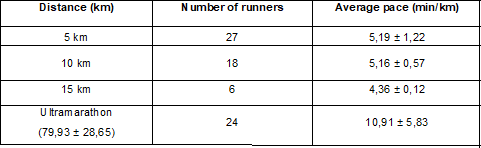
Figure 1 - Runner group summary
Blood sample collection and analysis
Capillary blood samples were collected in EDTA microtubes
by finger lobe puncture, using G-Tech 28G automatic lancets, at two points: (1)
pre-exercise, at rest, at least 30 minutes before the run; (2) immediately post-run,
for the 5, 10, and 15 km groups. For the ultramarathon group, samples were collected
at four points: (1) pre-exercise, at rest, at least 30 minutes before the run; (2)
mid-race (approx. 6h into the race); (3) immediately post-race (12h post); and (4)
eight days post-race. Samples were analyzed using the AFIAS-6, an automated fluorescence
immunoassay point-of-care system, offering quick and precise biomarker identification.
Inflammatory biomarker determination
Levels of interleukin-6 (IL-6) for understanding inflammatory
response status and myoglobin for understanding tissue (muscle) injury status were
measured using the AFIAS-6, which combines the accessibility of point-of-care systems
with the robustness of automated systems. This method offers fast and reliable results
for biomarker evaluation.
Results
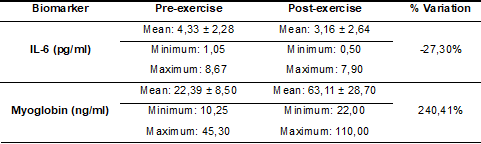
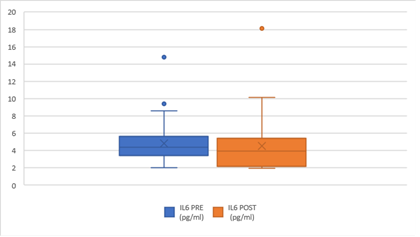
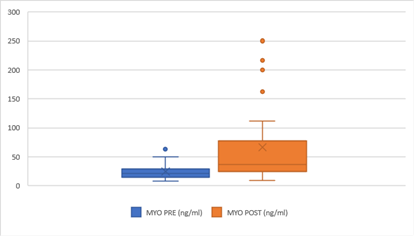
Figure 2 – Results
5 km
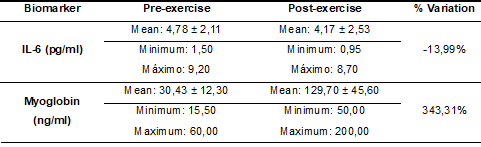
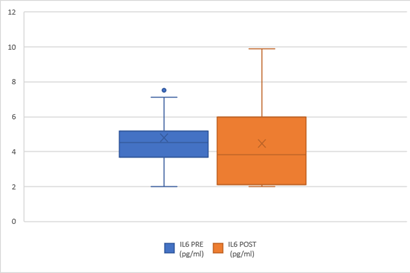
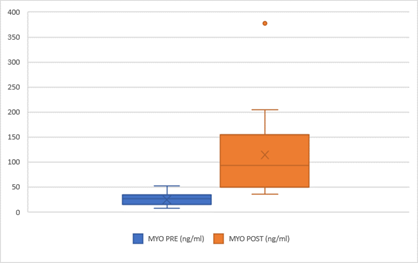
Figure 3 – Results
10 km
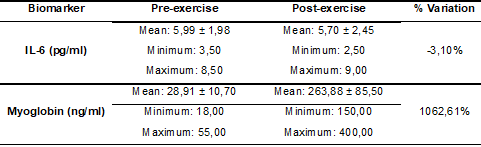
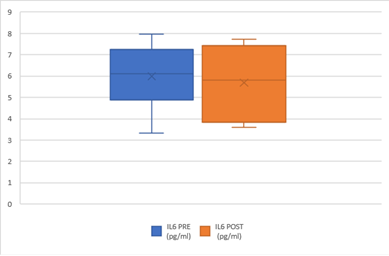
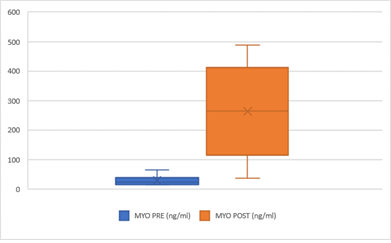
Figure 4 - Results 15 km
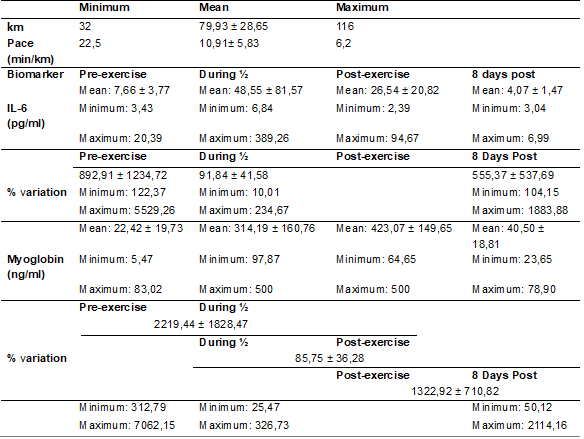
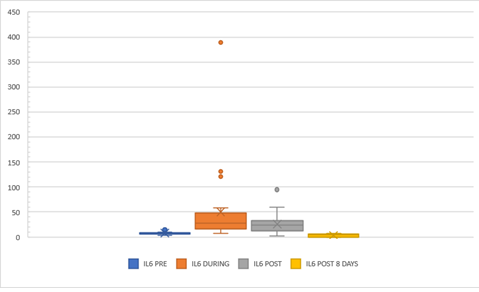
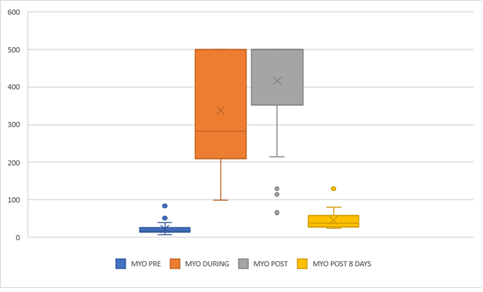
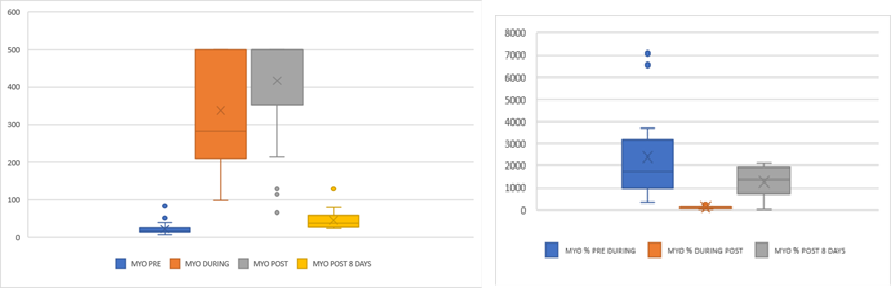
Figure 5 – Results ultramarathon
Statistical analysis
Descriptive analysis with calculations of mean, standard deviation,
minimum, and maximum for biomarkers pre- and post-exercise was performed. The percentage
variation was calculated using the formula: [(Post Value - Pre Value) / Pre Value]
× 100. Correlations between body weight and biomarker variation were tested using
Pearson's correlation coefficient. All analyses were performed using statistical
software with a significance level of p < 0.05.
Table I - Correlations between pace and biomarker variation

Discussion
Long-distance running, especially in ultramarathon events,
offers a unique opportunity to explore the complexities of physiological responses
to exercise, particularly in the urban context of Vitória-ES [2], a city recognized
for its commitment to healthy practices [4]. The ultramarathon, involving 12-hour
runs, presents significant challenges to the human body, highlighting the need to
understand the inflammatory and muscle damage responses associated with such extreme
exercise.
Endurance exercise, like ultramarathons, is widely recognized
for its cardiovascular health benefits and overall well-being [5,6]. However, it
also triggers an acute inflammatory response [7,8,10], which can result in exercise-induced
muscle damage (EIMD) [11]. This phenomenon is characterized by increased metabolic
demand and the production of reactive oxygen species (ROS) [11,12], which can compromise
muscle cell membrane integrity and release tissue biomarkers into the bloodstream.
Two critical biomarkers in this context are interleukin-6
(IL-6) and myoglobin. During ultramarathons, IL-6 levels experience a significant
increase, reflecting the intense inflammatory response and physical stress associated
with these prolonged runs [10,14]. IL-6, released by both muscles and the immune
system [15,16,17], acts as a central mediator of the inflammatory response [18,19],
modulating the immune response to intense exercise. In contrast, myoglobin, a muscle
protein [20,21], is released into the blood when cell damage occurs, serving as
a direct marker of muscle injury [22]. During ultramarathons, myoglobin levels increase
substantially, indicating the extent of tissue damage.
Monitoring the kinetics of these biomarkers is crucial due
to interindividual variability [9], influenced by factors such as age, training
level, genetics, and nutrition [13]. This variability is especially relevant for
recreational runners participating in ultramarathons [2], as it significantly affects
recovery and injury risk. Understanding inflammatory and muscle damage response
patterns in ultramarathon events allows for the optimization of recovery strategies
and exercise prescriptions, improving participants' quality of life and preventing
long-term health complications [23].
This study aims to deepen the understanding of IL-6 and myoglobin
responses in ultramarathon runners in the metropolitan region of Vitória-ES. Additionally,
it seeks to correlate these responses with anthropometric and performance variables
[3], underscoring the importance of monitoring these biomarkers in exercise management.
Understanding these responses allows the development of more personalized approaches
to recovery and injury prevention, promoting safer and more effective sports practice.
This not only contributes to individual health but also advances scientific knowledge
in the field of sports and physical exercise, providing valuable insights for coaches,
athletes, and health professionals.
Analysis by running distance
5 km
IL-6 pre vs. post-levels: There was a decrease from 4.33 ± 2.28 pg/ml to 3.16
± 2.64 pg/ml (-27.30%). This reduction suggests that in shorter runs, the inflammatory
response may be minimal or recovery begins quickly after the run.
Myoglobin pre vs. post-levels: Increased from 22.39 ± 8.50 ng/ml to 63.11 ±
28.70 ng/ml (+240.41%), indicating some degree of muscle damage, but on a smaller
scale compared to longer distances.
10 km
IL-6 pre vs. post-levels: Levels decreased from 4.78 ± 2.11 pg/ml to 4.17 ±
2.53 pg/ml (-13.99%). The slight decrease suggests a moderate inflammatory response
that is quickly regulated.
Myoglobin pre vs. post-levels: Increased from 30.43 ± 12.30 ng/ml to 129.70
± 45.60 ng/ml (+343.31%), showing a more pronounced increase in muscle damage compared
to 5 km.
15 km
IL-6 pre vs. post-levels: Slight reduction from 5.99 ± 1.98 pg/ml to 5.70 ±
2.45 pg/ml (-3.10%). This indicates that the inflammatory response is more sustained
but still controlled.
Myoglobin pre vs. post-levels: Rose from 28.91 ± 10.70 ng/ml to 263.88 ± 85.50
ng/ml (+1062.61%), indicating a substantial increase in muscle damage, which becomes
more pronounced with increased distance.
Ultramarathon
IL-6 Levels: Pre vs. Mid: Increase from 7.66 ± 3.77 pg/ml to 48.55 ± 81.57 pg/ml
(+533.68%), reflecting an intense inflammatory response.
Pre vs. Post: Reduction to 26.54 ± 20.82 pg/ml (-91.84% relative to pre) and
further decrease to 4.07 ± 1.47 pg/ml eight days after (-46.86% relative to pre),
indicating a prolonged recovery process.
Myoglobin pre vs. mid-levels: Increased from 22.42 ± 19.73 ng/ml to 314.19 ±
160.76 ng/ml (+1300.85%), showing a sharp increase in muscle damage.
Pre vs. Post: Increase to 423.07 ± 149.65 ng/ml (+1787.20%), with levels still
elevated eight days later (40.50 ± 18.81 ng/ml, +80.70% relative to pre), suggesting
that muscle recovery is more extended.
General discussion
The data from this study highlight a clear correlation between
the distance covered and the intensity of physiological responses, specifically
in terms of inflammation and muscle damage. As running distance increases, there
is an escalation in both the inflammatory response and muscle damage indicators,
as evidenced by rising levels of interleukin-6 (IL-6) and myoglobin.
Responses in short-distance runs
In shorter runs, such as 5 km, inflammatory responses are
more moderate, and recovery is fast. This may be due to shorter duration of intense
physical exertion, which allows the body to better manage metabolic stress and tissue
damage. Studies show that shorter-duration activities result in less pronounced
inflammatory responses, facilitating more efficient recovery [13].
Responses in medium-distance runs
For 10 km and 15 km runs, there is a more noticeable increase
in IL-6 and myoglobin levels. This increase suggests that, as distance and intensity
of effort increase, the body faces more significant metabolic demand, resulting
in a more robust inflammatory response and evident muscle damage [10].
Responses in ultramarathons
In ultramarathon events, the inflammatory response and muscle
damage become significantly more pronounced. Prolonged running results in substantial
production of reactive oxygen species (ROS), increasing oxidative stress and muscle
damage. This type of extreme exercise requires more elaborate and prolonged recovery
strategies [12].
Importance of individualized monitoring
Interindividual variability in physiological responses, influenced
by factors such as age, training level, and genetics, underscores the need for personalized
monitoring. The literature emphasizes the importance of adapting recovery and training
strategies to athletes' individual needs, considering their unique characteristics
and competition types [7].
Implications for training and recovery
Understanding the relationship between running distance and
physiological response is crucial for developing effective training programs. Coaches
and athletes can use this information to adjust training loads and implement recovery
strategies that maximize performance and minimize injury risk. Additionally, this
knowledge can inform exercise prescription and nutritional counseling, ensuring
athletes are physically prepared to handle the challenges of long-distance running.
In conclusion, this study not only emphasizes the importance of adapting recovery
strategies to exercise distance and intensity but also highlights the need for individualized
approaches, considering the complexity of the physiological responses involved.
Conclusion
Understanding these physiological dynamics allows for the
development of more personalized approaches to recovery and injury prevention, promoting
safer and more effective sports practice. Furthermore, precise biomarker monitoring
provides valuable insights for performance optimization and injury risk reduction,
contributing to significant advances in the field of sports and exercise science.
Conflicts of interest
The authors declare no conflicts of interest.
Funding sources
Study conducted without specific financial support.
Author contributions
Concept and design: Affonso HO; Data collection: Affonso HO,
Souza MB; Analysis and interpretation: Affonso HO, Manuscript writing: Affonso HO,
Souza MB, Critical review: Affonso HO
References
- Knopp M, Muñiz-Pardos B, Wackerhage H, Schonfelder M, Guppy F, Pitsiladis Y,
et al. Variability in running economy of Kenyan world-class and European amateur
male runners with advanced footwear running technology: experimental and meta-analysis
results. Sports Med. 2023;53:1255–71. doi: 10.1007/s40279-023-01816-1 [Crossref]
- McKenzie G, Romm D, Féré C, Guerrero Balarezo ML. Gender differences in urban recreational running: A data-driven approach. J Transp Geogr. 2025;124:104171. doi: 10.1016/j.jtrangeo.2025.104171 [Crossref]
- Ribalta C, Garrandes F, Bermon S, Adami PE, Ibarrola-Ulzurrun E, Rivas I, et al. Dynamic and stationary monitoring of air pollutant exposures and dose during marathons. Sci Total Environ. 2024;927:171997. doi: 10.1016/j.scitotenv.2024.171997 [Crossref]
- Rodrigo R, Adriano A, Priscila
G. Relatório do ranking das capitais brasileiras amigas da atividade física. Veja Saude [Internet].
2018 [cited 2025 Dec 12]. Available from: https://saude.abril.com.br/fit-ness/relatorio-do-ranking-das-capitais-brasileiras-amigas-da-atividade-fisica/?Fbclid=iwar3aktlopu-qsagnfidhexgt5ohpkgaxpqc9p1onr3ycdvftwtlano8b5rjs
- Niemiro GM, Allen JM, Mailing LJ, Khan NA, Holscher HD, Woods JA, De Lisio M.
Effects of endurance exercise training on inflammatory circulating progenitor cell
content in lean and obese adults. J Physiol. 2018 Jul;596(14):2811-22. doi: 10.1113/JP276023 [Crossref]
- Abd El-Kader SM, Al-Shreef FM. Long-term aerobic-resistance combined training improves health in young adult women by improving inflammatory mediators. Comp Exerc Physiol. 2025;21(2):105–17. doi: 10.1163/17552559-00001099 [Crossref]
- Gleeson M. Immune function in sport and exercise. J Appl Physiol. 2007 Aug;103(2):693-9. doi: 10.1152/japplphysiol.00008.2007 [Crossref]
- Nieman DC. Exercise immunology: practical applications. Int J Sports Med. 1997;18(Suppl 1):S91-100. doi: 10.1055/s-2007-972702 [Crossref]
- Dominguez-Muñoz A, Adsuar JC, Villafaina S, Leon-Llamas JL, Dominguez-Muñoz FJ. Test–retest reliability of ankle mobility, balance, and jump tests in amateur trail running athletes. Sports. 2025;13(10):352. doi: 10.3390/sports13100352 [Crossref]
- Weight LM, Alexander D, Jacobs P. Strenuous exercise: analogous to the acute-phase response? Clin Sci (Lond). 1991;81(5):677-83. doi: 10.1042/cs0810677 [Crossref]
- Suzuki K, Peake J, Nosaka K, Okutsu M, Matsumoto K. Changes in markers of muscle damage, inflammation and HSP70 after an Ironman triathlon race. Eur J Appl Physiol. 2006;98:525–534. doi: 10.1007/s00421-006-0296-4 [Crossref]
- Żychowska M. Changes in the acid-base balance and lactate concentration in the blood in amateur ultramarathon runners during a 100-km run. Biology of Sport. 2015;32(4):301-306. doi: 10.5604/20831862.1163372 [Crossref]
- Nieman DC, Davis JM, Henson DA, Walberg-Rankin J, Shute M, Dumke CL, et al. Carbohydrate ingestion influences skeletal muscle cytokine mRNA and plasma cytokine levels after a 3-h run. J Appl Physiol. 2003;94(5):1917-25. doi: 10.1152/japplphysiol.01130.2002 [Crossref]
- Chowdhury S, Schulz L, Palmisano B, Singh P, Berger JM, Yadav VK, et al. Muscle-derived interleukin 6 increases exercise capacity by signaling in osteoblasts. J Clin Invest 2020;130(6):2888-2902. doi: 10.1172/JCI133572 [Crossref]
- Pedersen BK, Febbraio MA. Muscle as an endocrine organ: focus on muscle-derived interleukin-6. Physiol Rev. 2012;93(3):1379-406. doi: 10.1152/physrev.00018.2011 [Crossref]
- Callegari IOM, Oliveira AG. Efeitos do exercício físico na resposta da interleucina-6 durante o tratamento da síndrome metabólica. Saúde e Desenvolvimento Humano. 2022;10(3). doi: 1018316/sdh.v10i3;9029 [Crossref]
- Reis ASLS, Comper MLC, Menucchi MRTP, Furtado GE, Borges GF. Resposta da IL-6 ao exercício
aeróbico na imunossenescência: uma revisão narrativa.
RBPFEX - Revista Brasileira de Prescrição e Fisiologia do Exercício. 2023;17(111):438-46.
- Fischer CP. Interleukin-6
in acute exercise and training: what is the biological relevance? Exerc Immunol
Rev. 2006;12:6-33. PMID: 17201070
- Koma R, Shibaguchi T, Yamada T, Nonaka Y, Jue T, Yamazaki A, Masuda K. Endurance training increases mitochondrial myoglobin and enhances its interaction with complex IV in rat plantaris muscle. Acta Physiol (Oxf). 2024;240(5):e14139. doi: 10.1111/apha.14139 [Crossref]
- Zoladz JA, Grandys M, Smeda M, Kij A, Kurpinska A, Kwiatkowski G, et al. Myoglobin deficiency impairs maximal oxygen uptake and exercise performance: a lesson from Mb-/- mice. J Physiol. 2024 Mar;602(5):855-73. doi: 10.1113/JP285067 [Crossref]
- Stathopoulos A, Petridou A, Kantouris N, Mougios V. A comparison of leg muscle oxygenation, cardiorespiratory responses, and blood lactate between walking and running at the same speed. Sports. 2024;12(2):48. doi: 10.3390/sports12020048 [Crossref]
- Dominguez-Muñoz A, Adsuar JC, Villafaina S, Leon-Llamas JL, Dominguez-Muñoz FJ. Test–retest reliability of ankle mobility, balance, and jump tests in amateur trail running athletes. Sports. 2025;13(10):352. doi: 10.3390/sports13100352 [Crossref]
- Peake JM, Markworth JF, Nosaka K, Raastad T, Wadley GD, Coffey VG. Modulating exercise-induced hormesis: does less equal more? J Appl Physiol. 2015;119:172-89. doi: 10.1152/japplphysiol.01055.2014 [Crossref]
