Rev Bras Fisiol Exerc. 2026;25(1):e255664
doi: 10.33233/rbfex.v25i1.5664ORIGINAL ARTICLE
Effects of acute beetroot juice supplementation on exercise-induced
hematological responses
Efeitos da
suplementação aguda de suco de beterraba nas respostas hematológicas induzidas
pelo exercício
Claudia de Mello Meirelles1,
Gabriela Cunha Rodrigues2, Matheus Lehmann Lourenci1,
Marcio Antonio de Barros Sena3, Cristiane
Matsuura2
1Escola de Educação Física do Exército,
Rio de Janeiro, Brazil
2Universidade do Estado do Rio de
Janeiro, Brazil
3Instituto de Pesquisa da Capacitação
Física do Exército, Rio de Janeiro, Brazil
Received: March 15th, 2026; Accepted: Abril 18th, 2026
Correspondence: Claudia de Mello Meirelles, claudiameirelles@yahoo.com.br
Como citar
Meirelles CM, Rodrigues GC, Lourenci ML, Sena MAB, Matsuura C. Effects of
acute beetroot juice supplementation on exercise-induced hematological
responses. Rev Bras Fisiol Exerc. 2026;25(1):e255664. doi:
10.33233/rbfex.v25i1.5664
Abstract
Introduction: Beetroot juice (BRJ), a source of inorganic nitrate, is
recognized for its ergogenic action; however, little is known about its effects
on hematological variables. Therefore, the aim of this study was to investigate
the effects of BRJ on erythrocyte, leukocyte, and platelet responses to intense
exercise. Methods: A crossover, double-blind, placebo-controlled
design was used in which 15 participants (5 women; 22 ± 2 years; 10.3% body
fat; VO2max 58.7 ± 3.5 mLO2.kg-1.min-1)
were randomly assigned to receive 100 mL of BRJ (10 g BT400, Dobro) or 100 mL
of placebo (PLA) two hours before an interval running test (5x600 m, 30 s
interval). Venous blood was collected before, immediately after, and 24 h after
the run (BC-6200, Mindray). Differences were tested using a paired t-test and a
2x3 ANOVA with repeated measures, Tukey's post-hoc test, α = 0.05. Results: No significant
effects were observed in the total time to complete the running protocol (PLA: 674.7 ± 49.5 s; BRJ: 677.8 ± 50.2 s). Significant
changes in heart rate responses and red blood cell and platelet counts were
observed, but no differences were observed between conditions. The exercise
caused significant leukocytosis, with no interaction between conditions and a
return to baseline values 24 h post-exercise (PLA: pre 5.4 ± 0.9; post 7.4 ±
1.0; 24h-post 5.9 ± 1.0; BRJ: pre 5.8 ± 1.1; post 7.3 ± 1.5; 24h-post 6.4 ± 1.3
thousands/µL); however, differences were observed in white blood cell
subpopulations. Conclusion: Acute supplementation with beetroot
juice does not affect performance in high-intensity interval running, but it
appears to exert some immunomodulatory effect on exercise responses.
Keywords: nitrate; erythrocytes; platelets; running; athlete
Resumo
Introdução: O suco de beterraba (SB), fonte de
nitrato inorgânico, é reconhecido pela sua ação ergogênica,
todavia, pouco se sabe sobre seus efeitos em variáveis hematológicas. Portanto,
o objetivo deste estudo foi investigar os efeitos do SB nas respostas
eritrocitárias, leucocitárias e plaquetárias em resposta ao exercício intenso. Métodos:
Desenho cruzado, duplo cego e controlado por placebo, no qual 15 participantes
(5 mulheres; 22 ± 2 anos; 10,3% gordura; VO2máx 58,7 ± 3,5 mLO2.kg-1.min-1)
receberam, aleatoriamente, 100 mL de SB (10 g BT400
Dobro) ou 100 mL de placebo (PLA) duas horas antes de
um teste de corrida intervalada (5 x 600 m, 30 s de intervalo). O sangue venoso
foi coletado antes, imediatamente após e 24h após a corrida (BC-6200, Mindray). As diferenças foram testadas pelo teste t pareado
e ANOVA 2x3 com medidas repetidas, pós-teste de Tukey,
α = 0,05. Resultados: Não foram observados efeitos significativos
no tempo total para completar o protocolo de corrida (PLA: 674,7 ± 49,5 s; SB:
677,8 ± 50,2 s). Alterações significativas nas respostas de frequência cardíaca
e na série vermelha e plaquetas sanguíneas foram observadas, mas sem diferenças
entre as condições. A corrida ocasionou leucocitose significativa, sem
interação entre as condições e retorno aos valores basais 24h pós-exercício
(PLA: pré 5,4 ± 0,9; pós 7,4 ± 1,0; 24h-pós 5,9 ±
1,0; SB: pré 5,8 ± 1,1; pós 7,3 ± 1,5; 24h-pós 6,4 ±
1,3 mil/µL), contudo, observou-se diferenças nas subpopulações de células
brancas. Conclusão: A suplementação aguda com suco de beterraba não
afeta o desempenho em corridas intervaladas de alta intensidade, mas parece
exercer algum efeito imunomodulador nas respostas ao exercício.
Palavras-chave: nitrato; eritrócitos; plaquetas;
corrida; atleta
Introduction
Beetroot juice
(BRJ) supplementation, one of the main sources of inorganic nitrate (NO₃⁻) has stood
out for its ergogenic potential observed in the time to exhaustion in aerobic exercises,
as well as in muscle endurance and power in anaerobic exercises [1], being considered
one of the top-5 nutritional supplements regarding the robustness of scientific
evidence of efficacy and safety of their use in various sports [2].
NO₃⁻ acts as a precursor
of the nitrate-nitrite-nitric oxide pathway (NO₃⁻ → NO₂⁻ → NO)). Its supplementation
increases the bioavailability of nitric oxide in skeletal muscle, which can favor
peripheral vasodilation and enhance the contractile efficiency and peak power of
muscle fibers. In mitochondria, it acts by stimulating biogenesis and respiratory
efficiency, and it also plays a role in the skeletal muscle redox state, through
its interaction with enzymes in the respiratory chain and transcriptional regulators
of antioxidant production [3]. There is also evidence that nitric oxide, generated
by the nitrate-nitrite-NO pathway, is an important regulator of the inflammatory
process, contributing to attenuating typical responses to stress caused by physical
exercise [4].
In addition
to being a source of NO₃⁻, BRJ contains significant amounts of phytonutrients,
including polyphenols and the pigment betalain, which have potential anti-inflammatory
and antioxidant effects. In vitro and in vivo studies have shown that betalain is
able to modulate markers involved in oxidative stress and inflammatory responses,
through lower production of enzymes/molecules such as cyclooxygenase-2 (COX-2),
inducible nitric oxide synthase (iNOS), and inflammatory cytokines (interleukins
6 and 8 - IL-6 and IL-8) [5].
Exercise-induced
inflammatory changes can be indirectly monitored by measuring blood leukocytes level.
An acute post-exercise leukocytosis is commonly observed, especially neutrophils
and eosinophils, due to increased bone marrow recruitment, which can be explained
by increased chemokines levels regulated by increase induced interleukins [6]. Therefore,
factors such as exercise and supplements affect the inflammatory response and white
blood cell homeostasis, but the evidence on this topic is still scarce.
A previous study
by our group supplemented 70 mL of concentrated BRJ (6.4 mmol nitrate) or placebo
(70 mL of nitrate-depleted BRJ) to military pentathletes prior to a cross-country
4 km running test and detected no significant modifications in enzymatic antioxidant
activity nor in plasma lipid peroxidation and protein carbonylation [7] however, we did not monitor the possible changes
caused in leukocyte concentrations.
Therefore, the
aim of the present study was to monitor the effects of beetroot juice supplementation
on erythrocyte and leukocyte responses, and platelet count in well-trained young
individuals undergoing high-intensity interval running.
Methods
Sample
The study included
15 apparently healthy and physically active young individuals, consisting of 5 women
and 10 men (age: 22 ± 2 years; body mass: 70.5 ± 8.3 kg; height: 173.8 ± 7.5 cm;
body fat: 10.3 ± 3.9%; VO2max estimated by the 12-minute test: 58.7 ±
3.5 mLO2.kg-1.min-1 [8]). All participants were
students in the Instructor Course at the School of Physical Educaion of the Army
(EsEFEx) and were familiar with the exercise test performed: interval running. The
exclusion criteria were: musculoskeletal lesions that prevented exercise, known
acute or chronic diseases, use of medications or supplements that may affect the
bioavailability of NO (organic nitrates, statins, nebivolol, antagonists of the
renin-angiotensin system, arginine, citrulline, antioxidants). The present study
was approved by the Research Ethics Committee of the Physical Capacitation Center
of the Army (under registration number 89810825.6.0000.9433).
Experimental design
The study was
a randomized, double-blind, placebo-controlled, crossover clinical trial, in which
each participant was assigned to two experimental conditions in a random, lottery-determined
order: BRJ and placebo. The experimental protocol comprised five visits to the Army
Physical Training Center (CCFEx) between 7 am and 12 pm.
At the first
visit, after signing the ICF, body composition was measured by bioimpedance (InBody
270, InBody CO, LTD, South Korea) and participants received guidance for subsequent
visits, including avoiding the use of mouthwashes (with the aim of preserving the
oral microbiome), as well as the consumption of nitrate-rich foods (such as beets,
spinach, celery, and arugula). Still, in the first visit, the order of supplementation
was defined randomly (by lottery).
In visits 2
and 4, the participants attended the laboratory in the morning, ingested the supplement
or placebo, and performed the exercise test. In addition, two blood samples were
taken: before and after exercise. Visits 2 and 4 were spaced one week apart in order
to avoid possible residual effects of supplementation.
Visits 3 and
5 were performed 24 hours after visits 2 and 4, respectively, and blood collected
during these visits. Figure 1 illustrates the experimental.
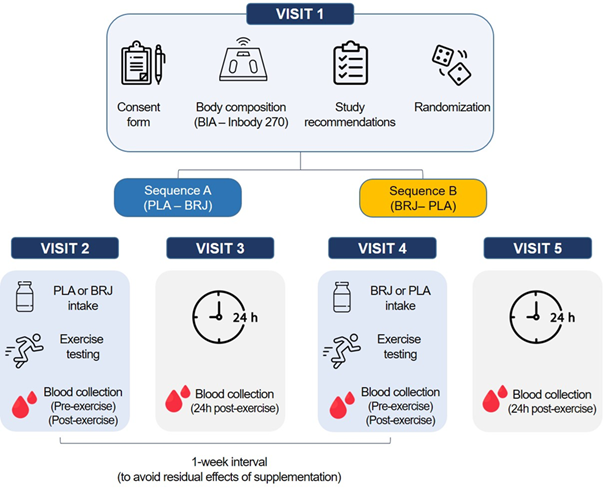
Figure 1 - Experimental design of the study (image generated
by AI and modified by the authors)
Supplementation
At visits 2
and 4, participants received 100 mL of placebo or BRJ in bottles identified as A
or B. To ensure the integrity of the experimental design, the bottles were prepared
by a third party who did not participate in data collection or analysis. In this
way, both participants and researchers remained blinded to the contents of each
drink, minimizing the risk of bias. The identification of the interventions was
only revealed after the conclusion of data collection and analysis, when necessary
for statistical analysis.
BRJ was prepared
by reconstituting the BT400 NIT supplement (Dobro, Brazil) in Clight® grape-flavored
soft drink (10 g BT400 NIT in 100 mL of soft drink, 400 mg of nitrate, and 8 g of
carbohydrates). The placebo consisted of 100 mL of Grape Clight® plus 8 g of maltodextrin
to ensure the same amount of carbohydrates present in the BT400 supplement.
The intake of
BRJ or placebo was performed two hours before the interval running test, ensuring
sufficient time for an increase in circulating nitrate and nitrite levels [9].
Exercise protocol
The exercise protocol consisted of
an interval run (5 x 600 m with a 30 s interval between each interval), preceded
by 10 minutes of warm-up, performed on a 400 m athletics track. Participants were instructed to perform the first four
intervals at a steady pace, keeping their heart rate between 77 and 93% of maximum,
and to perform the last interval at the highest possible intensity. Heart rate was
continuously monitored during the exercise session by a monitor. The duration of
each interval was recorded by the research team using a digital sports stopwatch.
Blood collection and hematological
analysis
Blood was collected
by venipuncture into EDTA tubes by a specialized technician. Data collection was
performed at three time points: immediately before the exercise, immediately after
the exercise, and 24 hours after the exercise. The samples were sent to the Central
Laboratory of the Pedro Ernesto University Hospital, and the blood count was performed
in the BC-6200 automated hematology analyzer (Mindray, China).
Statistical analysis
Comparisons
between conditions and moments were performed using repeated-measures analysis of
variance (2 x 3 ANOVA), followed by Tukey's post-hoc test in case of significant
F. All analyses were performed using the Graphpad Prism software, version 8.0, and
the values of P ≤ 0.05 were considered statistically significant.
Results
Safety of beetroot juice and placebo
Both BRJ and
placebo proved to be safe beverages. There were no reports of adverse effects with
the ingestion of the beverages, except for the slightly reddish urine with the ingestion
of the BRJ.
Physical performance
BRJ intake did
not significantly alter interval running performance. To evaluate performance, the
times spent at each break were compared, along with the total time. As observed
in Figure 2, the study participants maintained a stable pace in the first four intervals
and increased their pace in the last interval, as evidenced by the significantly
shorter time in the last interval compared to interval four, with no difference
between the conditions. Similarly, there was no significant
difference between the placebo and BRJ conditions for the sum of times (PLA, 674.7
± 49.5 s; BRJ, 677.8 ± 50.2 s; P = 0.2869).
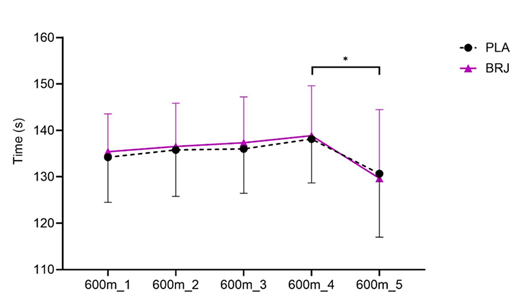
Figure 2 - Time to run each 600 m interval.
* P ≤ 0.05. PLA, placebo; BRJ, beetroot juice
Heart rate was continuously measured
throughout the exercise protocol, and the average heart rate for each interval was
reported. ANOVA showed
a main effect of the interval (P < 0.0001), with heart rate of the first interval
significantly lower than in the others in both conditions (Figure 3). There was
no significant effect of BRJ supplementation, nor was there an interaction between
the factors on heart rate. However, in the BRJ condition, but not in the PLA, the
heart rate of interval 5 differed from that of intervals 2 and 3.
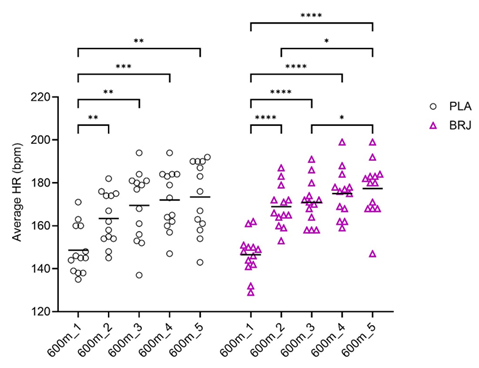
Figure 3 - Mean heart rate recorded at each 600 m interval.
* P ≤ 0.05; ** P ≤ 0.01; *** P ≤ 0.001; **** P ≤ 0.0001. PLA, placebo; BRJ, beetroot
juice
Based on the
heart rate of each interval, we can categorize exercise as high-intensity. The relative
heart rate values are presented in Table I, with the maximum heart rate estimated
by Tanaka's equation [10] (208 – 0.7 x age).
Table I - Relative intensity of each running interval based
on estimated individual maximum heart rate

Percentage of
maximum heart rate estimated by Tanaka's equation (208 - 0.7 x age). Values presented
as mean ± SD (minimum-maximum). PLA, placebo; BRJ, beetroot juice
Erythrogram and platelet changes
Significant
changes in the red series and platelets were observed immediately after exercise
or during the recovery period, but there were no differences between the conditions
(Table II).
Table II - Erythrogram and platelet count. (mean ± SD)
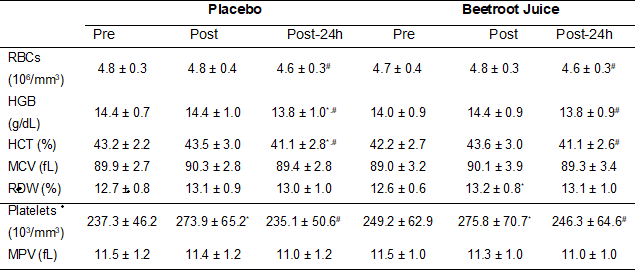
For all variables
except mean corpuscular volume (MCV), there was a significant main effect of time,
but not of supplementation or supplementation-time interaction, indicating that
interval running affected these variables either acutely or within 24 hours after
exercise.
Regarding the
red series, we observed a significant reduction in erythrocyte count in the post-24h
period compared to the post-immediate period in both conditions. Hemoglobin concentration
and hematocrit were also reduced 24 hours after exercise, differing significantly
from the values before and immediately after exercise in the placebo condition,
and only from immediately after the BRJ condition. On the other hand, there was
no significant variation in the size of these erythrocytes, as identified by the
MCV. The anisocytosis index (RDW) increased significantly immediately after exercise
compared to the pre-exercise index, but only in the supplemented condition.
Platelets showed
different behavior compared with erythrocytes. A significant increase induced by
interval running was observed with a return to pre-exercise levels in 24 hours in
both conditions. Although a major effect of time (P = 0.0048) on mean platelet volume
(MPV) was evidenced, multiple post-hoc comparisons did not reveal significant differences.
Changes in the white blood cell
count
The leukocyte
changes induced by exercise and supplementation are shown in Figure 4. Interval
running caused significant leukocytosis, with no interaction between the conditions
and return to baseline values 24 hours post-exercise in the placebo condition, but
not in the BRJ (Figure 4A).
The increase
in leukocyte count was mainly influenced by lymphocytes. In both conditions, running
significantly increased the number of lymphocytes, which decreased 24 hours after
exercise, returning to pre-exercise values in PLA, but not in BRJ (Figure 4C). For
neutrophils, a major effect of supplementation was observed (P = 0.0231; 95%CI of
the difference, 0.069-0.805), and the post-hoc test identified that 24 hours after
the race, the neutrophil count remained significantly higher in the BRJ condition
than in the PLA condition, but returned to baseline values in both (Figure 4B).
Eosinophils, on the other hand, showed a different behavior from the other subpopulations,
being the only variable for which a significant interaction was observed (P = 0.0092).
At the pre-exercise moment, the total eosinophils were significantly higher in BRJ
than PLA, and it should be noted that in PLA, eosinophils increased in the 24 hours
post-race instead of reducing (Figure 4E). Monocytes were not significantly affected
by running or supplementation (Figure 4D). Basophil count also showed a major effect
of time, showing a higher increase in the BRJ condition in the pre-exercise, and
only in PLA was a post-exercise increase detected compared to the pre-exercise (Figure
4F).
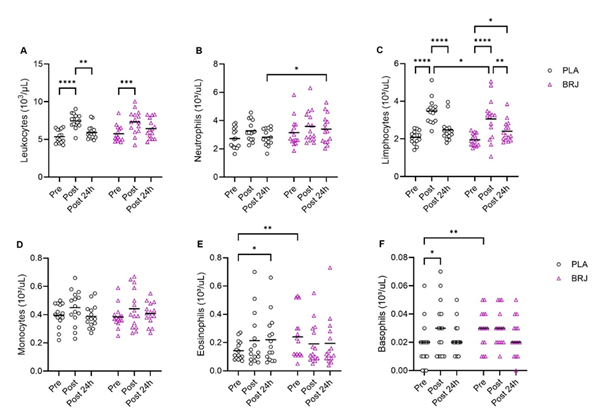
Figure 4 - Leukogram. A, leukocytes; B, neutrophils; C, lymphocytes;
D, monocytes; Eosinophils; F, basophils. * P ≤ 0.05; ** P ≤ 0.01;
*** P ≤ 0.001; **** P ≤ 0.0001
Discussion
The present
study investigated the effects of acute beetroot juice intake on high-intensity
interval running performance and hematological responses in young, physically active
individuals of both sexes. The main results indicate that although supplementation
with beetroot juice was safe and well tolerated, it did not improve exercise performance
or significantly modulate most hematological parameters compared with placebo. However,
subtle effects on leukocyte subpopulations suggest a potential immunomodulatory
role of dietary nitrate under conditions of high physiological stress.
Inorganic nitrate,
a main natural source of which is beets, is considered one of the few nutritional
supplements with robust scientific evidence of efficacy and safety for use in various
sports [2]. But, contrary to expectations, nitrate supplementation did not improve
performance in interval running. Participants maintained similar pacing strategies
across all conditions, with a typical final sprint pattern, regardless of supplementation.
In addition, the total exercise time was not different between the conditions. These
findings contrast with studies demonstrating ergogenic effects of nitrate in high-intensity
interval exercise or repeated sprints [11,12], although the literature is inconsistent
[13]. In addition, we did not find any studies that investigated an exercise protocol
similar to that used in the present study (5 x 600 m with a 30 s interval), which
is one of the tests of modern pentathlon. A similar protocol was used in the study
by Santana et al. [14], who did not identify significant differences in physical
performance in a 4 x 400 m event.
The absence
of ergogenic effects observed here may be due to the level of training of the study
participants. There is a growing body of evidence questioning its effectiveness,
particularly in individuals with high fitness levels [15,16,17]. Our sample consisted
of young military personnel and students of the Army's Physical Education Instructor
Course. Although they are not athletes in specific sports, all of them performed
excellently on the physical fitness test, including the aerobic capacity component.
The estimated VO2max of the study participants ranged from 51 to 57 mLO2.kg-1.min-1
among women, and from 57 to 65 mLO2.kg-1.min-1
among men, which is classified as "superior" by the American College of
Sports Medicine [18].
The mechanisms
underlying the absence of nitrate effects in this population are still speculative.
One hypothesis is that training optimizes endogenous NO synthesis via nitric oxide
synthase, so that the exogenous supply of nitrate and nitrite is innocuous. An interesting
finding of our group was that plasma levels of nitrate and nitrite did not differ
between the BRJ and placebo conditions, measured immediately after exercise in female
military pentathletes, although they were significantly higher before exercise when
supplemented [19]. This result suggests that the demand for NO during exercise can
be met by endogenous synthesis in well-trained individuals, with no additional benefits
from supplementation.
In addition,
inter-individual variability in response to nitrate supplementation is well documented
and may depend on training level and baseline nitric oxide bioavailability [20].
It is also possible that acute supplementation was insufficient, as some evidence
suggests greater benefits from chronic intake [17].
The heart rate
responses confirmed the high physiological demand of the protocol. The absence of
an effect of supplementation on heart rate is consistent with previous studies showing
that nitrate supplementation does not consistently alter central cardiovascular
responses during aerobic exercise [21].
The exercise
protocol induced hematological changes, regardless of supplementation. The reduction
in erythrocyte, hemoglobin, and hematocrit counts 24 hours after exercise likely
reflects hemodilution and plasma volume expansion, rather than actual erythrocyte
loss [22]. The increase in the anisocytosis index immediately after exercise indicates
a greater range in erythrocyte size distribution and may be due to acute erythrocyte
stress, potentially related to mechanical and oxidative factors [23]. It should
be noted, however, that although significant changes from the statistical point
of view were observed, the values remained within the normal range.
Platelet count
increased immediately after exercise and returned to baseline levels within 24 hours,
consistent with transient hemostatic activation mediated by catecholamine-induced
splenic contraction [24]. Platelets are figurative blood elements, fundamental for
hemostasis. Physical exercise is known to play a dual role in cardiovascular pathophysiology.
Chronic use, it has numerous benefits in both the prevention and treatment of cardiovascular
diseases. However, it is a clear stressor due to increased sympathetic activity,
increased myocardial oxygen demand, and a prothrombotic profile, particularly at
high intensities [25]. BRJ supplementation and the resulting increase in NO bioavailability
may counteract this acute risk, given its known inhibitory effects on platelet activation
and vasodilation [26]. However, this hypothesis should be investigated in further
studies, as it falls outside the scope of the present study, however mean platelet
volume can be considered an indicator of platelet activation.
Regarding leukocyte
dynamics and immunomodulatory effects, exercise-induced leukocytosis was observed,
with approximately 42% and 31% increases in the PLA and BRJ conditions, respectively
(P = 0.394). This total increase in white cells was mainly driven by lymphocytes
(approximately 70% in PLA and 61% in BRJ; P = 0.612), followed by a decline during
the 24 h of recovery. This biphasic response reflects the redistribution of immune
cells and characterizes acute exercise [27]. However, the pattern observed in the
present study differs from that reported in a previous study that surveyed leukocyte
variations in 800 young people practicing physical exercise [5], which indicated
that the increase in neutrophil count, not lymphocytes, was factor mainly responsible
for exercise-induced leukocytosis.
Discussing these
findings, particularly in the context of exercise and supplementation, is still
challenging. As far as we know, only one study has been conducted in this regard.
Clifford et al. [28], based on the premise of a potential antioxidant and
anti-inflammatory activity of beet phytonutrients and the critical role of NO in
regulating cellular inflammation, offered BRJ for three days to trained youngsters
after a marathon race and did not detect any effect of BRJ on leukocyte count and
its subpopulations.
In our study,
observing fluctuations in lymphocyte count, it is noteworthy that BRJ supplementation
attenuated the increase observed immediately after exercise compared with the PLA
condition, whose values were significantly higher than those in BRJ. As mentioned
in the introduction, NO generated from the nitrate-nitrite-NO pathway is a critical
regulator of inflammation [4] and betalain and polyphenols exhibit anti-inflammatory
activity [5], which could explain the effect of BRJ in attenuating leukocytosis.
However, in view of the results of the present study, this hypothesis was true only
for lymphocyte counts, and did not explain the behavior of the other leukocyte subpopulations,
which, in general, reached significantly higher concentrations (neutrophils, basophils,
and eosinophils) or were not affected by BRJ supplementation (monocytes).
It is important
to recognize that the present study has some limitations; for example, the sample
size estimation using an effect size of 0.4, alpha of 0.05, and beta of 0.95 (G
Power software) yielded 16 participants, but we obtained 15 participants. We did
not measure blood nitrate and nitrite concentrations, assuming, based on previous
studies from our laboratory, that supplementation with 400 mg of nitrate through
beetroot juice would already significantly increase these concentrations within
2 hours [19]. We also did not have access to the concentrations of phytonutrients
in the commercially available supplement we use, but, given that it is composed
of beetroot powder, we assumed it would preserve the original levels found in the
root. Finally, we collected blood samples before, immediately after, and 24 hours
after exercise, which may have prevented us from observing hematological behavior
at intermediate time points.
Conclusion
Acute supplementation
with beetroot juice is safe but does not improve performance in high-intensity interval
races. Although hematologic responses remained largely unchanged, changes in leukocyte
subpopulations suggest a potential immunomodulatory effect of dietary nitrate. These
findings highlight the complexity of elucidating the role of nitrate supplementation
in the context of exercise physiology and sports nutrition.
Conflict of
interest
The authors
declare no conflict of interest with the present study.
Funding
None
Author contributions
Conception and
design of the research: Meirelles CM, Matsuura C; Data collection:
Lourenci ML, Sena MAB, Rodrigues GC; Analysis and interpretation of data:
Rodrigues GC, Sena MAB, Meirelles CM, Matsuura C; Statistical analysis: Matsuura
C ; Writing the manuscript: Rodrigues GC, Meirelles CM, Matsuura C; Critical
revision of the manuscript for important intellectual content: Meirelles CM,
Matsuura C
References
- Poon ET, Iu JC, Sum WM, Wong PS,
Lo KK, Ali A, et al. Dietary nitrate supplementation and exercise performance: an
umbrella review of 20 published systematic reviews with meta-analyses. Sports Med.
2025;55(5):1213-31. doi: 10.1007/s40279-025-02194-6 [Crossref]
- Antonio J, Pereira F, Curtis J, Rojas J, Evans C. The top 5 can't-miss sport supplements. Nutrients. 2024;16(19): 3247. doi: 10.3390/nu16193247 [Crossref]
- Mueller BJ, Roberts MD, Mobley CB, Judd RL, Kavazis AN. Nitric oxide in exercise physiology: past and present perspectives. Front Physiol. 2024;15:1504978. doi: 10.3389/fphys.2024.1504978 [Crossref]
- Waltz P, Escobar D, Botero AM, Zuckerbraun BS. Nitrate/nitrite as critical mediators to limit oxidative injury and inflammation. Antioxidants & Redox Signaling. 2015;23(4):328-39. doi: 10.1089/ars.2015.6256 [Crossref]
- Martinez RM, Melo CPB, Pinto IC, Mendes-Pierotti S, Vignoli JA, Verri WA, et al. Betalains: A narrative review on pharmacological mechanisms supporting the nutraceutical potential towards health benefits. Foods. 2024;13(23):3909. doi: 10.3390/foods13233909 [Crossref]
- Sand KL, Flatebo T, Andersen MB, Maghazachi AA. Effects of exercise on leukocytosis and blood hemostasis in 800 healthy young females and males. World J Exp Med. 2013;3(1):11-20. doi: 10.5493/wjem.v3.i1.11 [Crossref]
- Martins NC, Figueiredo PN, Rodrigues GC, Meirelles CM,
Martins MA, editors. Suplementação com nitrato do suco de beterraba no desempenho
físico e estresse oxidativo de pentatletas militares. X Congresso Norte e Nordeste
de Nutrição Clínica e Esportiva; 2025; Brazil
- Cooper KH. A means of assessing maximal oxygen intake. Correlation between field and treadmill testing. JAMA. 1968;203(3):201-4. doi: 10.1001/jama.1968.03140030033008 [Crossref]
- Wylie LJ, Kelly J, Bailey SJ, Blackwell JR, Skiba PF, Winyard PG, et al. Beetroot juice and exercise: pharmacodynamic and dose-response relationships. J Appl Physiol. 2013;115(3):325-36. doi: 10.1152/japplphysiol.00372.2013 [Crossref]
- Tanaka H, Monahan KD, Seals DR. Age-predicted maximal heart rate revisited. J Am Coll Cardiol. 2001;37(1):153-6. doi: 10.1016/s0735-1097(00)01054-8 [Crossref]
- Thompson C, Vanhatalo A, Jell H, Fulford J, Carter J, Nyman L, et al. Dietary nitrate supplementation improves sprint and high-intensity intermittent running performance. Nitric Oxide. 2016;61:55-61. doi: 10.1016/j.niox.2016.10.006 [Crossref]
- Wong TH, Sim A, Burns SF. The effect of beetroot ingestion on high-intensity interval
training: a systematic review and meta-analysis. Nutrients. 2021;13(11):3674. doi: 10.3390/nu13113674 [Crossref]
- Robinson GP, Killer SC, Stoyanov Z, Stephens H, Read L, James LJ, et al. Influence of dietary nitrate supplementation on high-intensity intermittent running performance at different doses of normobaric hypoxia in endurance-trained males. Int J Sport Nutr Exerc Metab. 2021;31(1):1-8. doi: 10.1123/ijsnem.2020-0198 [Crossref]
- Heibel AB, Perim PHL, Saunders B, Heibel AB, Abrantes DM, Rauber CF, et al. Abstracts from ISSN Brazil. Journal of the International Society of Sports Nutrition. 2017;14(Supl1):8. doi: 10.1186/s12970-017-0164-0 [Crossref]
- Peacock O, Tjønna AE, James P, Wisløff U, Welde B, Böhlke N, et al. Dietary nitrate does not enhance running performance in elite cross-country skiers. Med Sci Sports Exerc. 2012;44(11):2213-9. doi: 10.1249/MSS.0b013e3182640f48 [Crossref]
- Sandbakk SB, Sandbakk Ø, Peacock O, James P, Welde B, Stokes K, et al. Effects of acute supplementation of L-arginine and nitrate on endurance and sprint performance in elite athletes. Nitric Oxide. 2015;48:10-5. doi: 10.1016/j.niox.2014.10.006 [Crossref]
- Senefeld JW, Wiggins CC, Regimbal RJ, Dominelli PB, Baker SE, Joyner MJ. Ergogenic effect of nitrate supplementation: A systematic review and meta-analysis. Med Sci Sports Exerc. 2020;52(10):2250-61. doi: 10.1249/mss.0000000000002363 [Crossref]
- ACSM. ACSM's Guidelines for Exercise
Testing and Prescription. 12 ed: Lippincott Williams &
Wilkins; 2025
- Figueiredo PN. Efeitos agudos do suco de beterraba sobre
o desempenho físico, o estresse oxidativo e o perfil metabolômico em pentatletas
militares do sexo feminino [Dissertação]. Universidade do Estado do Rio de Janeiro;
2025
- Hayes E, Alhulaefi S, Siervo M, Whyte E, Kimble R, Matu J, et al. Inter-individual differences in the blood pressure lowering effects of dietary nitrate: a randomised double-blind placebo-controlled replicate crossover trial. Eur J Nutr. 2025;64(2):101. doi: 10.1007/s00394-025-03616-x [Crossref]
- Yuschen X, Choi JH, Seo J, Sun Y, Lee E, Kim SW, et al. Effects of acute beetroot juice supplementation and exercise on cardiovascular function in healthy men in preliminary study: a randomized, double-blinded, placebo-controlled, and crossover trial. Healthcare (Basel). 2024;12(13). doi: 10.3390/healthcare12131240 [Crossref]
- Sawka MN, Convertino VA, Eichner ER, Schnieder SM, Young AJ. Blood volume: importance and adaptations to exercise training, environmental stresses, and trauma/sickness. Med Sci Sports Exerc. 2000;32(2):332-48. doi: 10.1097/00005768-200002000-00012 [Crossref]
- Lippi G, Salvagno GL, Danese E, Tarperi C, Guidi GC, Schena F. Variation of red blood cell distribution width and mean platelet volume after moderate endurance exercise. Adv Hematol. 2014;2014:192173. doi: 10.1155/2014/192173 [Crossref]
- Schaffner A, Augustiny N, Otto RC, Fehr J. The hypersplenic spleen. A contractile reservoir of granulocytes and platelets. Arch Intern Med. 1985;145(4):651-4. doi: 10.1001/archinte.145.4.651 [Crossref]
- Bärtsch P. Platelet activation with exercise and risk of cardiac events. Lancet. 1999;354(9192):1747-8. doi: 10.1016/s0140-6736(99)90259-3 [Crossref]
- Walford G, Loscalzo J. Nitric oxide in vascular biology. J Thromb Haemost. 2003;1(10):2112-8. doi: 10.1046/j.1538-7836.2003.00345.x [Crossref]
- Nieman DC. Exercise immunology: practical applications. Int J Sports Med. 1997;18 Suppl 1:S91-100. doi: 10.1055/s-2007-972705 [Crossref]
- Clifford T, Allerton DM, Brown MA, Harper L, Horsburgh S, Keane KM, et al. Minimal muscle damage after a marathon and no influence of beetroot juice on inflammation and recovery. Appl Physiol Nutr Metab. 2017;42(3):263-70. doi: 10.1139/apnm-2016-0525 [Crossref]
